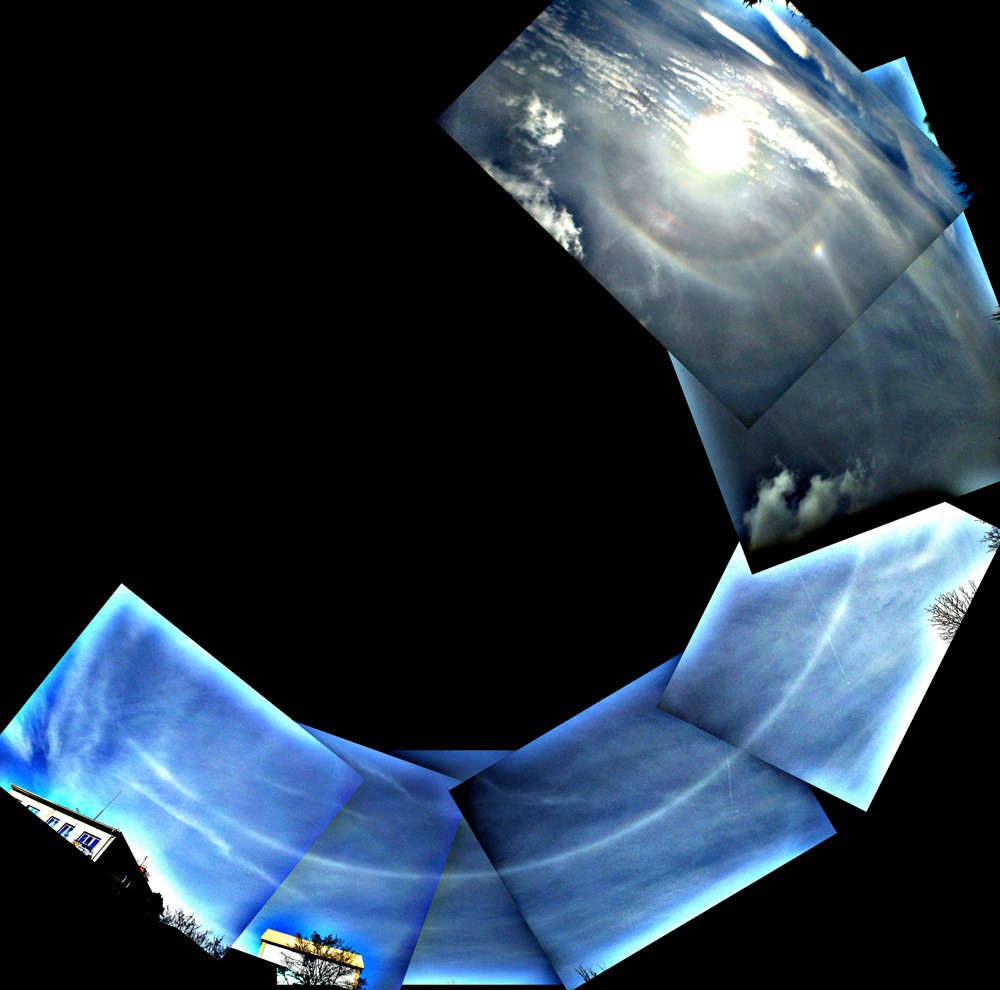
At the weekend of 15 – 16 March, observers in the northern part of the Czech Republic had some opportunity to see rare halo phenomena. On 15 March, in the afternoon, fine cirrostratus came from the west, and subsequently bright halos appeared.
Patrik Trncak took a series of photos of the display. The most uncommon halos that he observed were the Wegener arc, which crossed the parhelic circle; and the Tricker arc, which was noticed afterwards on the images processed by Registax ( 1 ).
The next day, the situation was similar, but the Wegener arc was brighter and the cirrostratus clouds lasted for a shorter period ( 2 ).
I (Martin Popek) didn’t have such good luck but I could also observe some interesting halos. On the first day, a nice suncave Parry arc was visible, which shows well on the stacked images. By the bright parhelia, Lowitz arcs appeared, and after a long period of time I saw an infralateral arc, as well ( 3 - 4 ).
On the second day, the halos were less numerous. There was only one that is not so frequent: a faint 46° halo ( 5 ). Later I observed an interesting lunar display, too, including a diffuse 9° halo ( 6 - 7 ).
Text: Martin Popek, Lukas Shrbeny
2008. március 26., szerda
2008. március 13., csütörtök
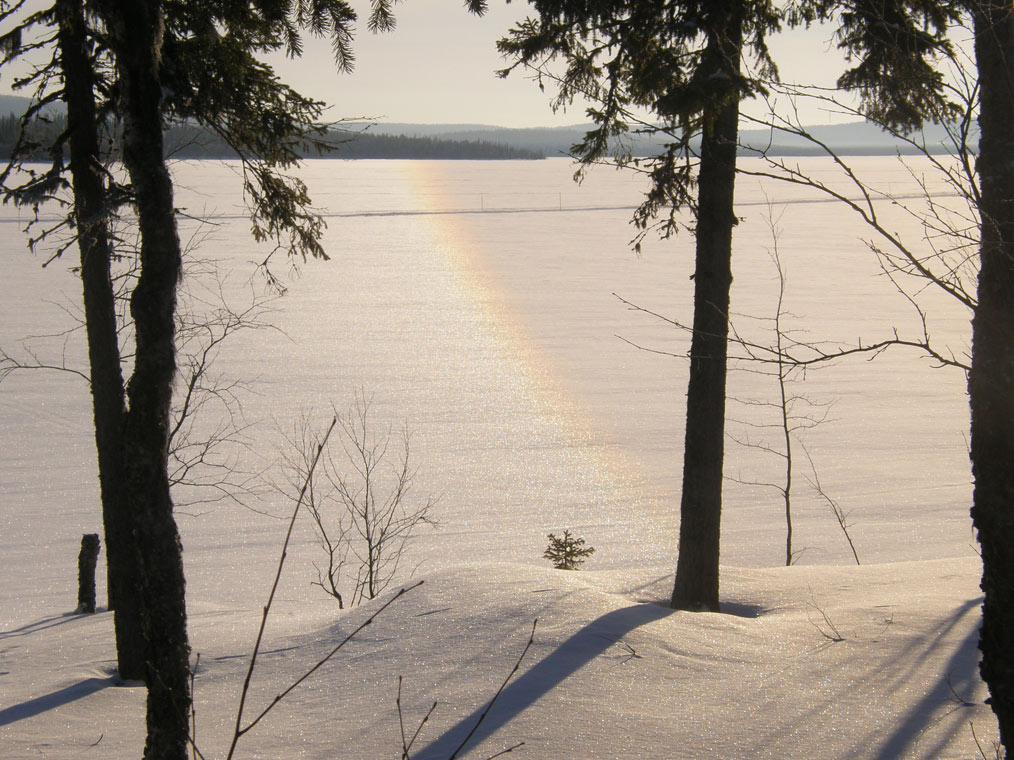
22° halo on snow surface
Sirkka Sario took this photo in Lake Jerisjärvi, Muonio, on 5 March. Another photo is also provided ( 1 ).
2008. március 10., hétfő
Name change
Although our blog name "Halo Reports" had served reasonably well all these years, we felt it is time for a change. The blog is now "Ice Crystal Halos". The new name goes straight to the core of the things and is self explaining enough so that the subtitle was not necessary anymore.
New address for the blog is http://www.ursa.fi/blogit/ice_crystal_halos/index.php
The old address works as well. Veikko Mäkelä mastered the change so that links to photos in blog folders were updated accordingly.
Hope you feel ok with the change.
New address for the blog is http://www.ursa.fi/blogit/ice_crystal_halos/index.php
The old address works as well. Veikko Mäkelä mastered the change so that links to photos in blog folders were updated accordingly.
Hope you feel ok with the change.
2008. március 3., hétfő
Distinction of 22, 23 and 24° halos from snow surface
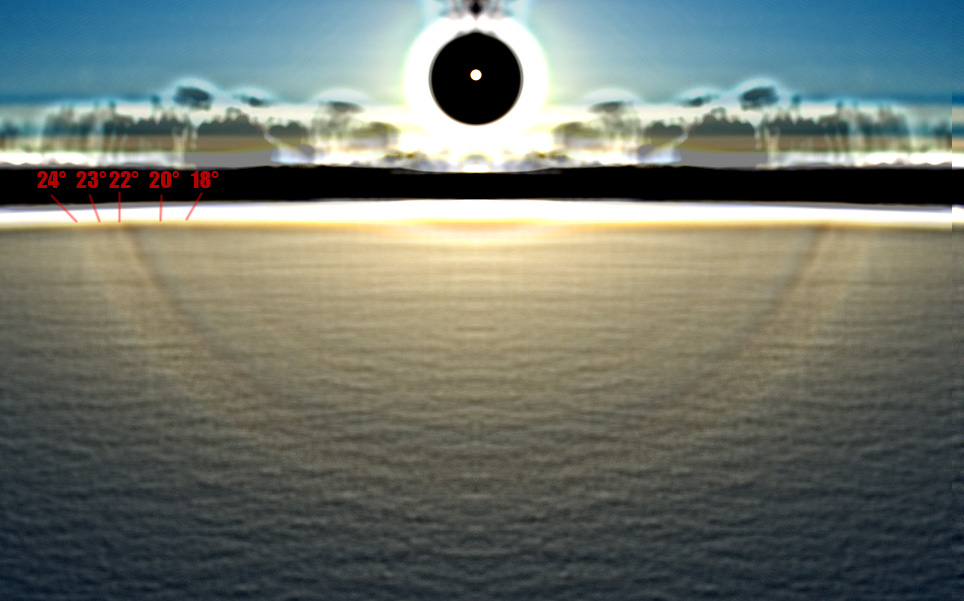
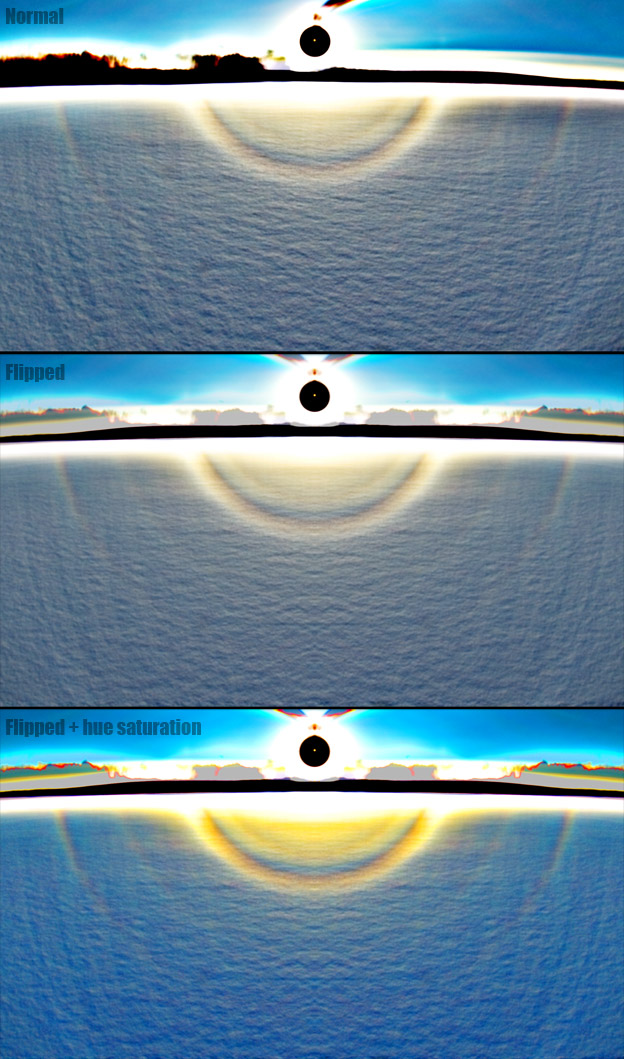
A broad 22° halo is observed in most odd radius displays. One factor explaining the broadness can be simultaneous occurrence of 22, 23 and 24° halos, or any combination of two of these halos. As we know, separation between 22° and 24° halos is detectable, but 23° halo has not been distinguished from the other two so far.
In the image above all the three halos are separated. This was made possible - in addition to having a suitable display - by stacking an extensive amount of images of a snow surface display. Using Rexistax, total of 379 frames were stacked and the resulting image was further stacked with its mirror image, essientially doubling the frames used. The separation of the three halos is seen also in non-mirrored image ( 1 ).
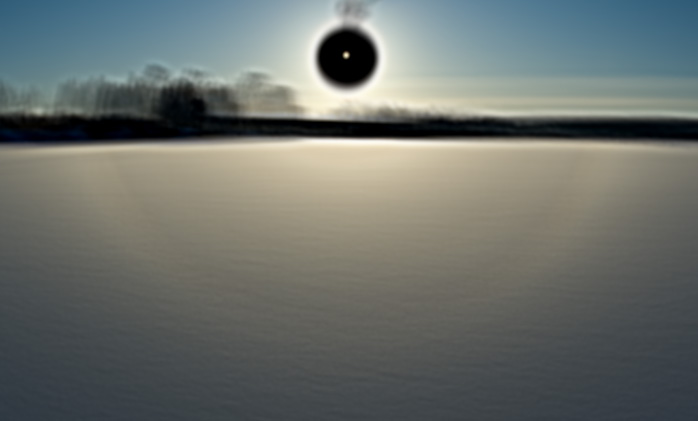
9, 18, 20, 35 and 46° halos were present as well. The first three are visible in the above image, which is a close up of 8 mm fisheye image. The 9° halo, of which only the lowermost part is seen, is overexposed. An image with only minor digital enhancement is given for comparison ( 2 ).
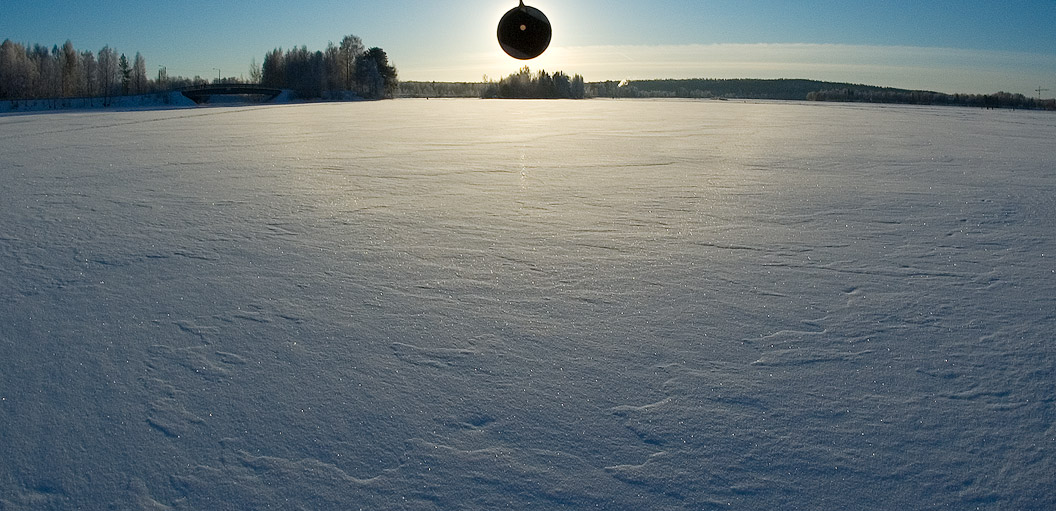
Three versions of full frame image show the 35 and 46° halos ( 3 ). A single frame ( 4 ) reveals the true nature of the display: it was nothing a passer-by would notice, and to me it might not have been any special unless I had known that day earlier in the same place odd radius halos were observed ( 5 ).
The photography was done on river ice in Rovaniemi in February. The method was to take 3 to 5 photos from different heights by adjusting vertically the tripod central bar and then moving the tripod some 20-30 cm and again taking a set of photos, and so on. This was faster way to obtain large number of photos from different positions than moving the tripod after each shot, as was done day earlier.
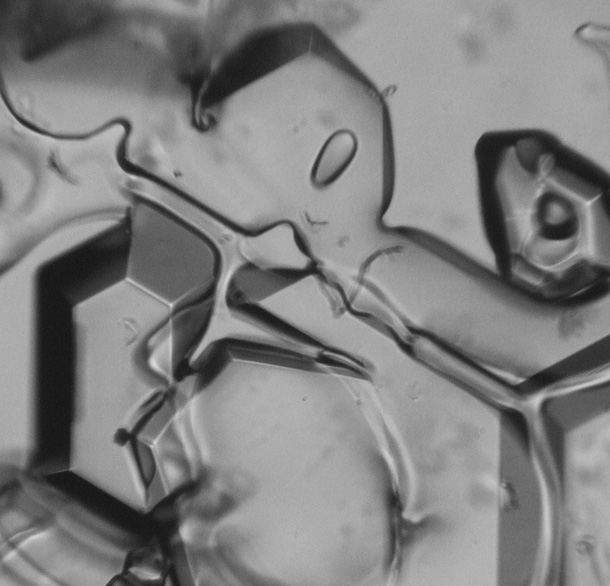
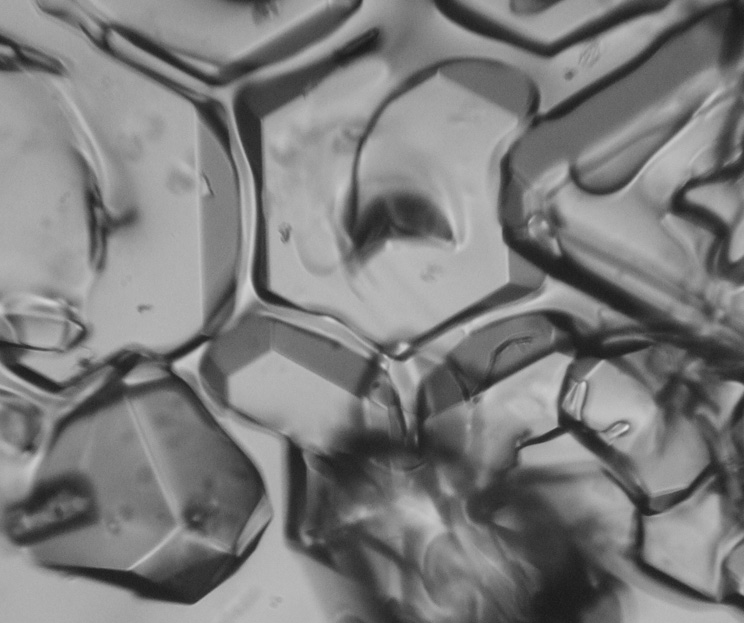
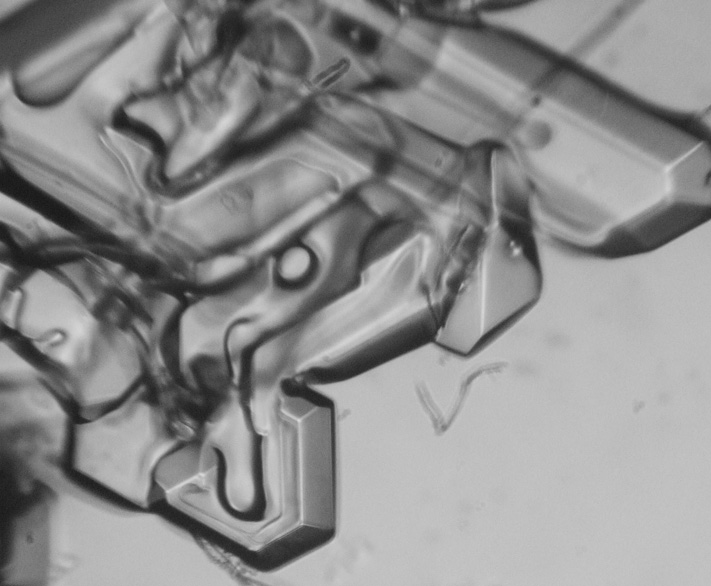
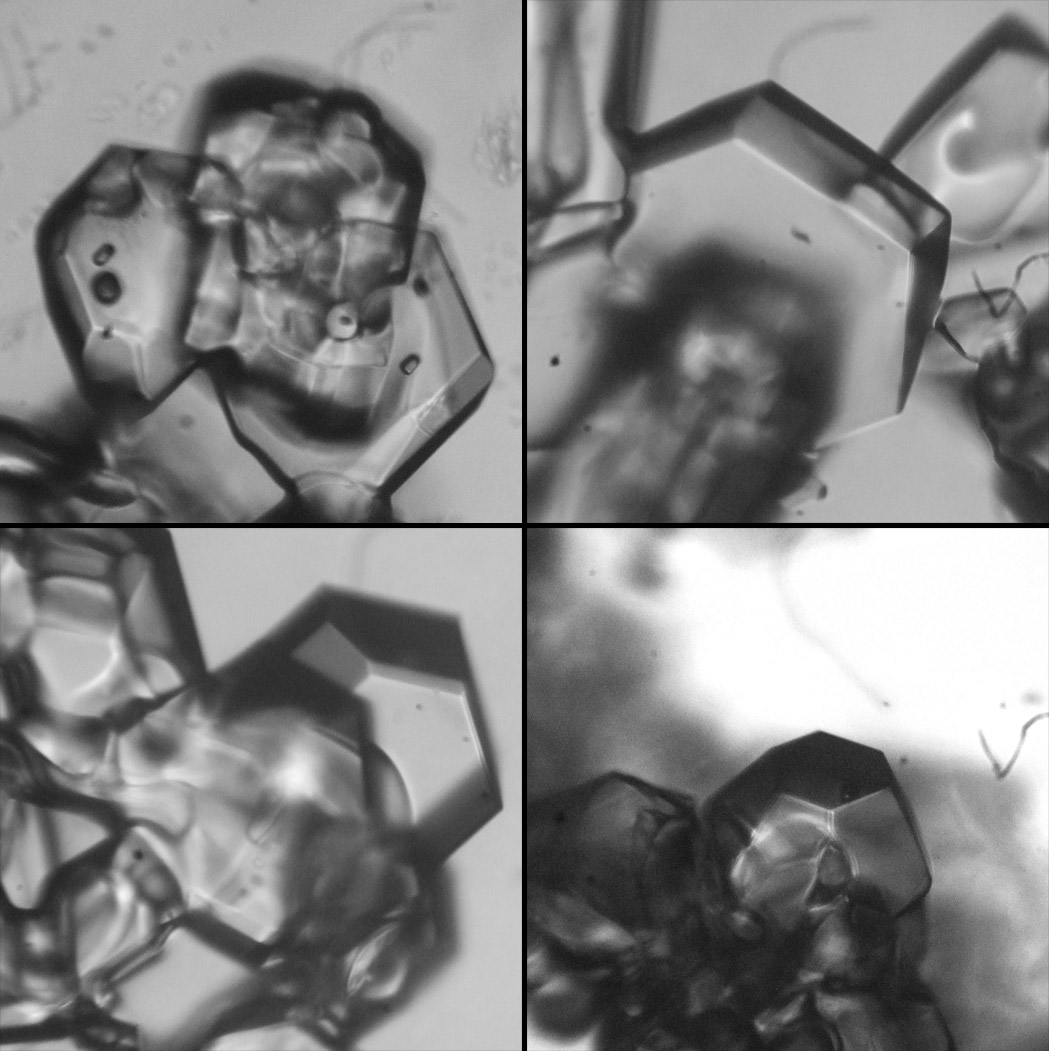
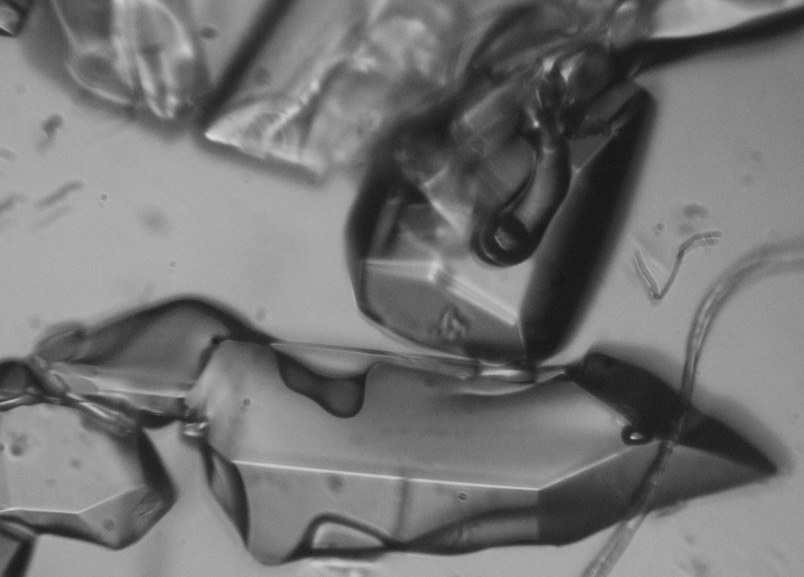
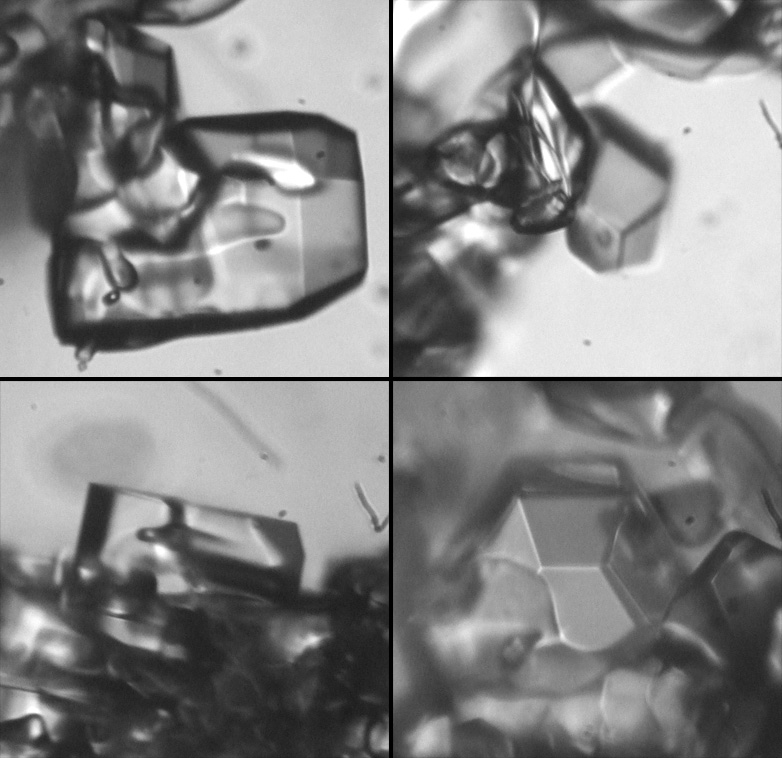
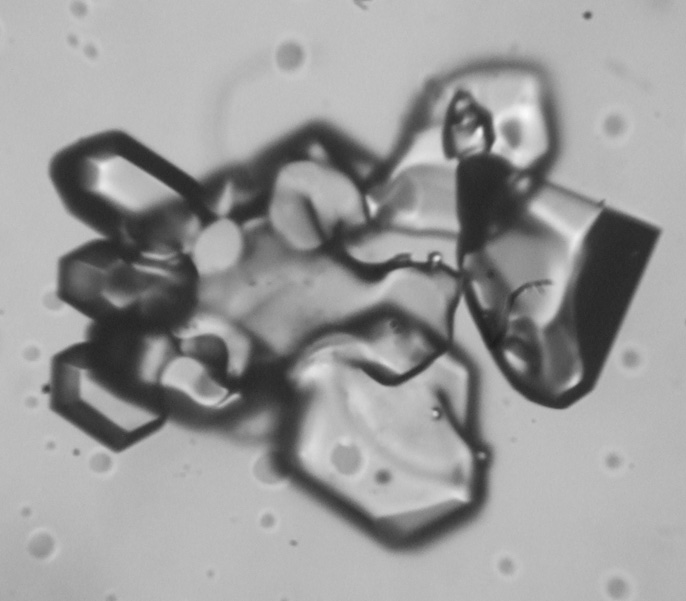
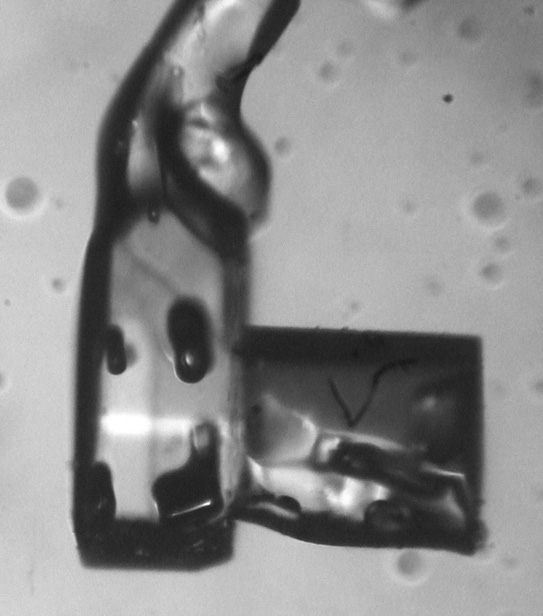
Samples of snow surface crystals were photographed in the location as darkness was approaching. Pyramidal faces were abundant ( 6 - 7 - 8 - 9 - 10 - 11 - 12 - 13 - 14 - 15 - 16 ).
The issue of pyramid crystal formation temperature was addressed in the discussion of the previous day display. Again the temperatures were not that cold, previous night was around -10 °C and it was cloudy. It cleared up in the morning and minimum temperature in the official measuring point of Rovaniemi center was -12 °C during the photography soon after midday.
It may be that snow surface presents a special situation concerning the pyramid crystal formation (and maintenance) temperatures. There is some evidence in the literature that pyramid crystals can exist on snow surface even at as high temperatures as -2.5 °C.
Whether that is really the case, it is nevertheless good to keep in mind that odd radius halos may exist on snow surface in “unconventional” temperatures and they may be much more common than we have known. However, these displays may not be easily recognized as special and stacking might be needed to visualize them.
In the image above all the three halos are separated. This was made possible - in addition to having a suitable display - by stacking an extensive amount of images of a snow surface display. Using Rexistax, total of 379 frames were stacked and the resulting image was further stacked with its mirror image, essientially doubling the frames used. The separation of the three halos is seen also in non-mirrored image ( 1 ).
9, 18, 20, 35 and 46° halos were present as well. The first three are visible in the above image, which is a close up of 8 mm fisheye image. The 9° halo, of which only the lowermost part is seen, is overexposed. An image with only minor digital enhancement is given for comparison ( 2 ).
Three versions of full frame image show the 35 and 46° halos ( 3 ). A single frame ( 4 ) reveals the true nature of the display: it was nothing a passer-by would notice, and to me it might not have been any special unless I had known that day earlier in the same place odd radius halos were observed ( 5 ).
The photography was done on river ice in Rovaniemi in February. The method was to take 3 to 5 photos from different heights by adjusting vertically the tripod central bar and then moving the tripod some 20-30 cm and again taking a set of photos, and so on. This was faster way to obtain large number of photos from different positions than moving the tripod after each shot, as was done day earlier.
Samples of snow surface crystals were photographed in the location as darkness was approaching. Pyramidal faces were abundant ( 6 - 7 - 8 - 9 - 10 - 11 - 12 - 13 - 14 - 15 - 16 ).
The issue of pyramid crystal formation temperature was addressed in the discussion of the previous day display. Again the temperatures were not that cold, previous night was around -10 °C and it was cloudy. It cleared up in the morning and minimum temperature in the official measuring point of Rovaniemi center was -12 °C during the photography soon after midday.
It may be that snow surface presents a special situation concerning the pyramid crystal formation (and maintenance) temperatures. There is some evidence in the literature that pyramid crystals can exist on snow surface even at as high temperatures as -2.5 °C.
Whether that is really the case, it is nevertheless good to keep in mind that odd radius halos may exist on snow surface in “unconventional” temperatures and they may be much more common than we have known. However, these displays may not be easily recognized as special and stacking might be needed to visualize them.
2008. február 23., szombat
Two diamond dust displays near Moscow
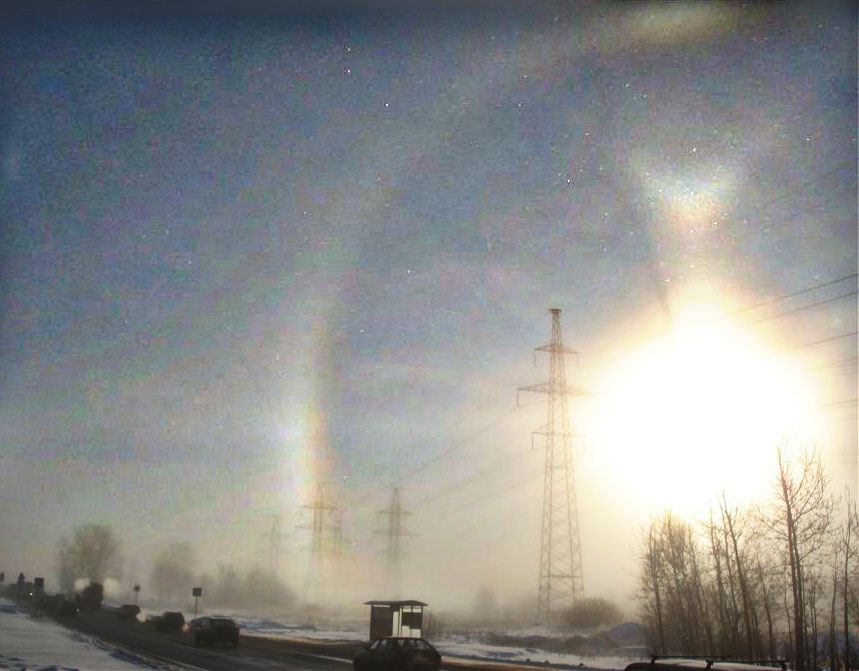
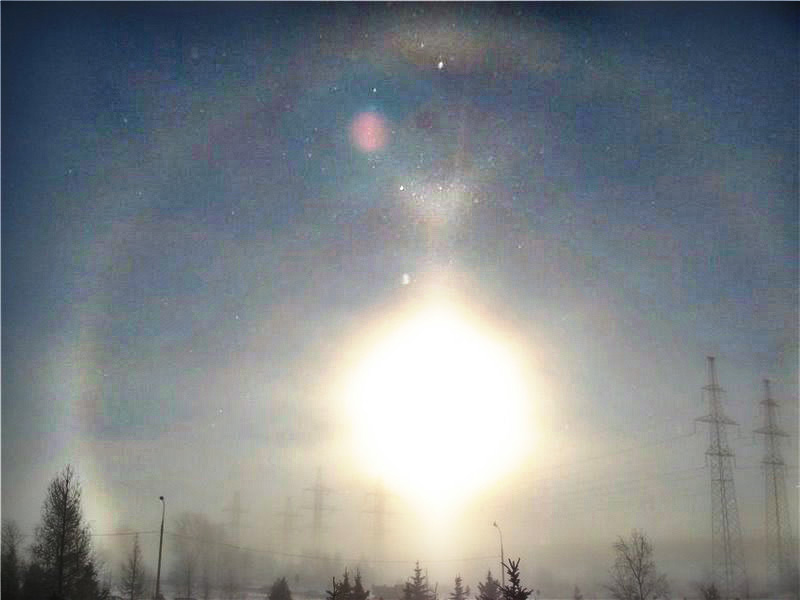
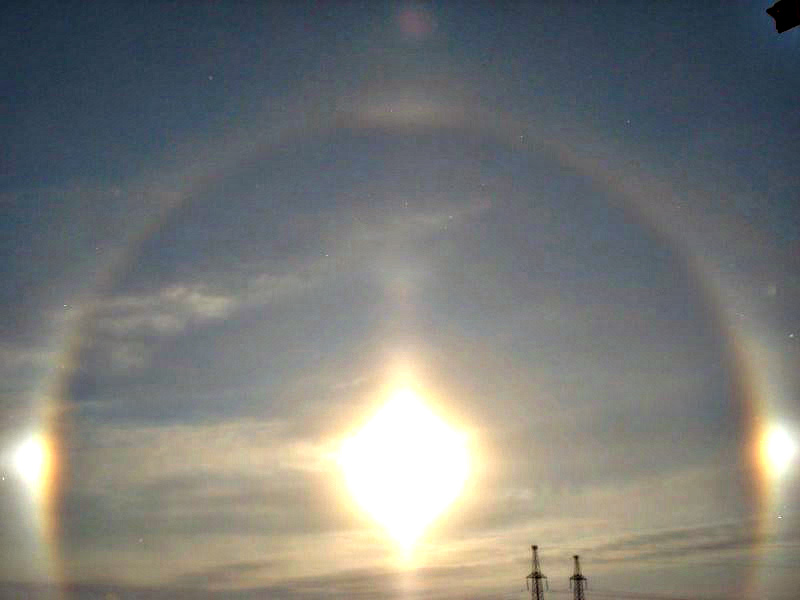
On 21 February ice crystals filled the air in Rumyancevo, a suburb of Moscow, and a halo display with relatively strong Moilanen arc was photographed by Alexandr Yakovlev. One of the photos, with unsharp mask enhancement, is shown above. Another photo is also given ( 1 ).
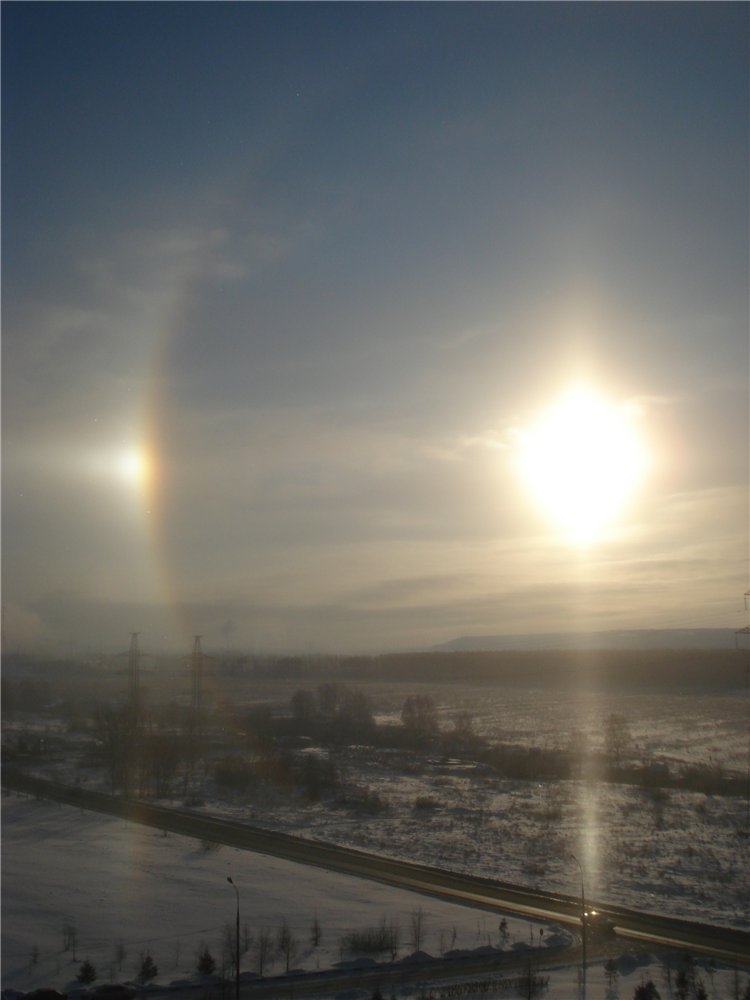
A year earlier, on 1 February 2007 Yakovlev photographed a diamond dust display with subsun and subparhelia from the 7th floor of a building ( 2 - 3 ). In the photos Moilanen arc is also present faintly. An unsharp masked image shows it better ( 4 ).
The original images of both displays are available on my blog ( 5 ).
2008. február 15., péntek
Diamond dust display in Dolni Morava
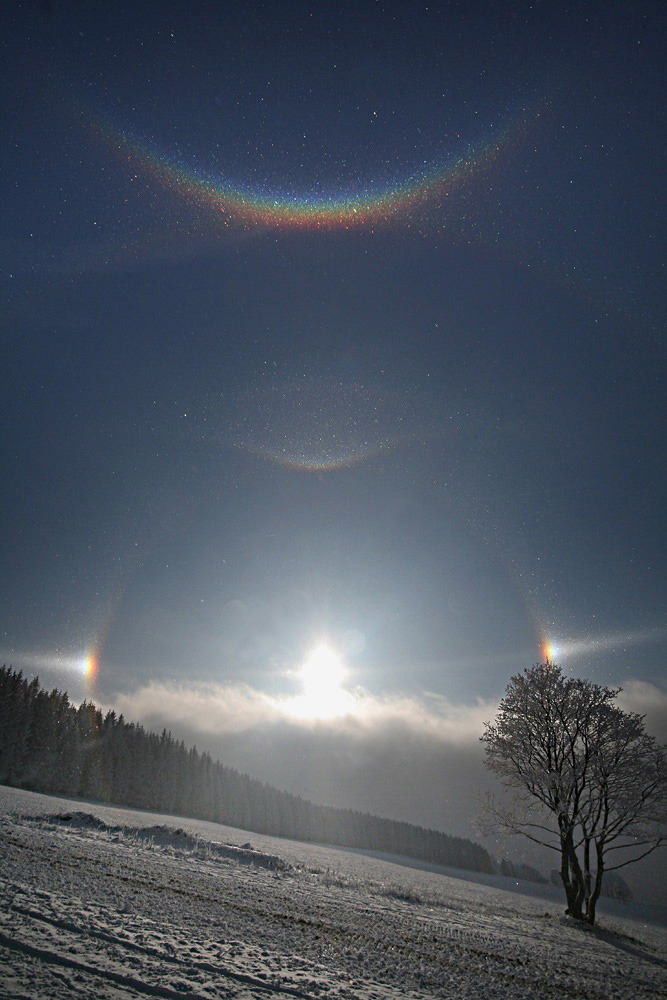
On 29 December 2007, Radomir Vondra observed a complex diamond dust display above an inversion cloud layer. He was walking to the ski slope in the village of Dolni Morava, when he saw the halos between 12:30 and 13:00. The elevation of the Sun was about 15 degrees above the horizon, and the dominant phenomena that first appeared were the parhelia and a bright circumzenith arc. Later, after the sky got clearer, a suncave Parry arc appeared above the upper tangent arc. An unsharp masked version of the photo is also available ( 1 ).
On the same day, Matej Lebl observed well-defined parhelia in Rokytnice nad Jizerou ( 2 – 3 ).
Text: Martin Popek, Lukas Shrbeny
On the same day, Matej Lebl observed well-defined parhelia in Rokytnice nad Jizerou ( 2 – 3 ).
Text: Martin Popek, Lukas Shrbeny
2008. február 11., hétfő
ESEM column crystal photo
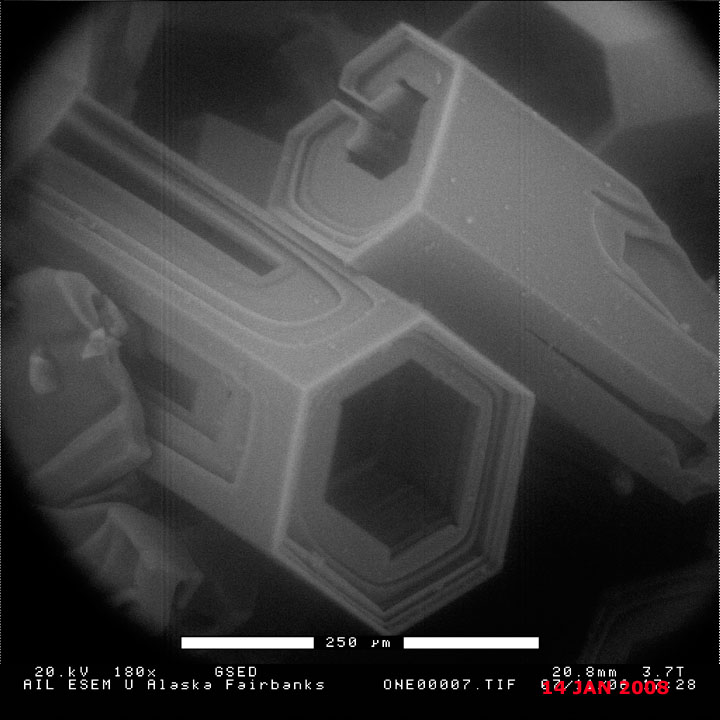
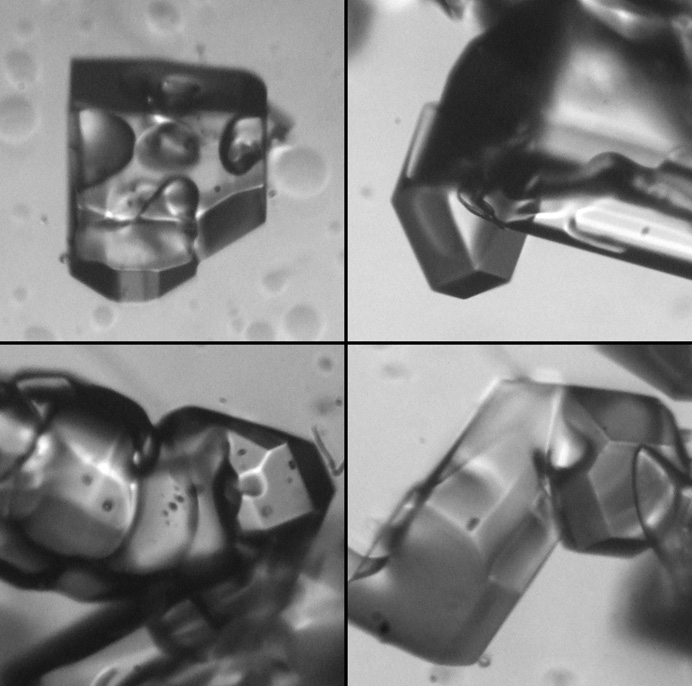
Column crystals are a dime a dozen, but the ones shown here are nicely positioned and thus unusually revealing. Although we were collecting atmospheric crystals at the time, these monsters are probably frost crystals from the dewar mouth that fell into the liquid nitrogen and contaminated the sample. The photo is by Tom Kircher at the Advanced Instrumentation Lab, University of Alaska.
Text: Walt Tape
Text: Walt Tape
Feliratkozás:
Bejegyzések (Atom)