Although our blog name "Halo Reports" had served reasonably well all these years, we felt it is time for a change. The blog is now "Ice Crystal Halos". The new name goes straight to the core of the things and is self explaining enough so that the subtitle was not necessary anymore.
New address for the blog is http://www.ursa.fi/blogit/ice_crystal_halos/index.php
The old address works as well. Veikko Mäkelä mastered the change so that links to photos in blog folders were updated accordingly.
Hope you feel ok with the change.
A következő címkéjű bejegyzések mutatása: Miscellaneous. Összes bejegyzés megjelenítése
A következő címkéjű bejegyzések mutatása: Miscellaneous. Összes bejegyzés megjelenítése
2008. március 10., hétfő

2007. augusztus 4., szombat
Complex displays in Eastern Europe


The display continued until sunset with a 22° halo, parhelia, upper tangent arc, circumzenith arc and supralateral arc. In Vecsés, the clouds started thickening, but in Budapest the conditions got better at this time of the day. In a rather narrow stretch over the capital, a Tape arc was observed between 16:40-16:56. Images were taken by Alexandra Farkas and Tibor Hollósy ( 3 and enhanced 4 ). They did not see other halos formed by Parry oriented crystals, but 7 km to the north and only 3 minutes earlier, Márk Laczkó had photographed an upper suncave Parry arc ( 5 - 6 ).

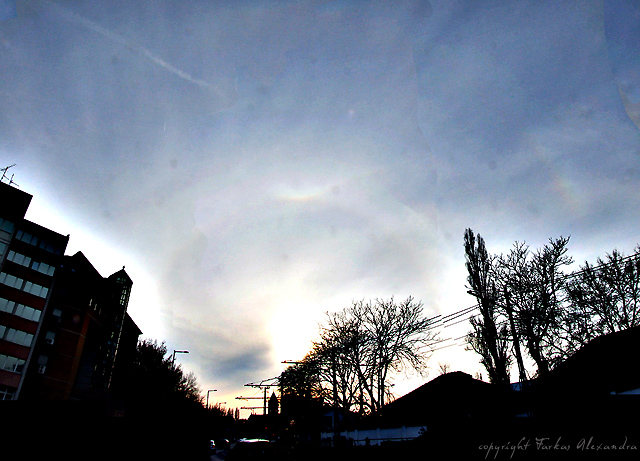
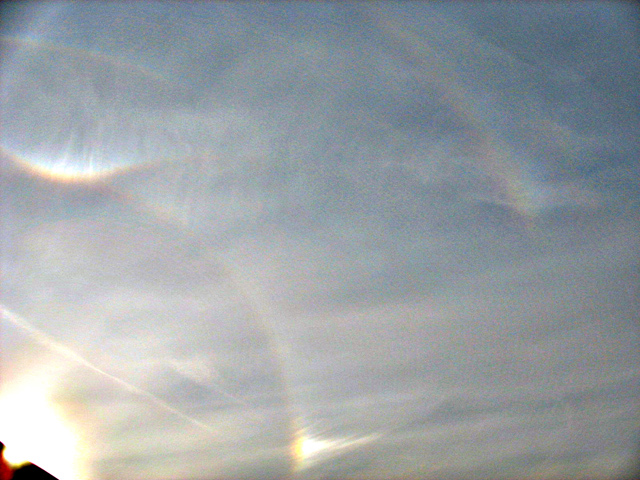
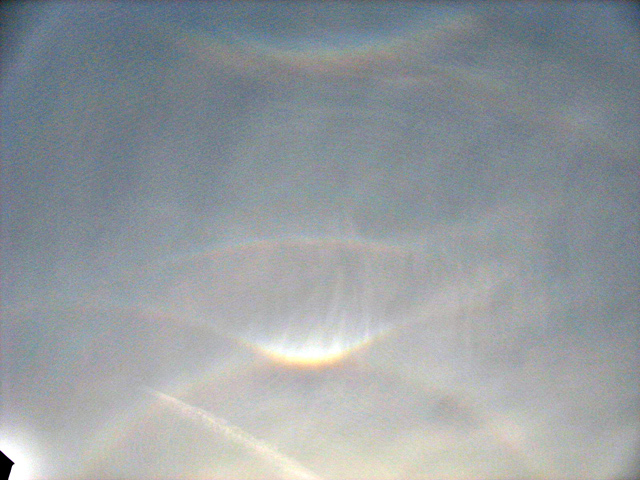
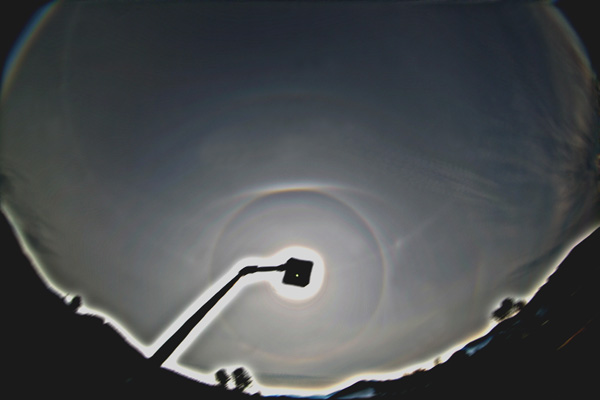
In Hungary, there were two other observations of complex displays with complete or almost complete parhelic circles. One on 1 April (Ágnes Kiricsi in Vecsés), the other one on 5 April (Alexandra Farkas, Tibor Hollósy in "Remete" Gorge).
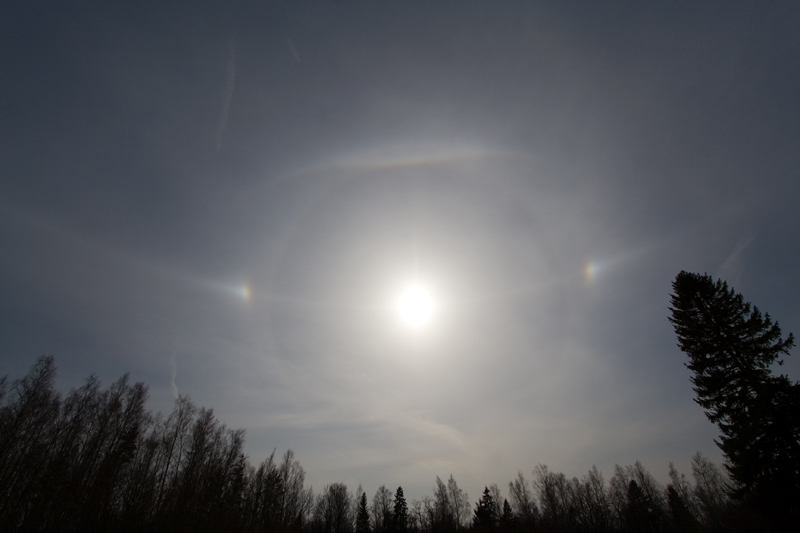
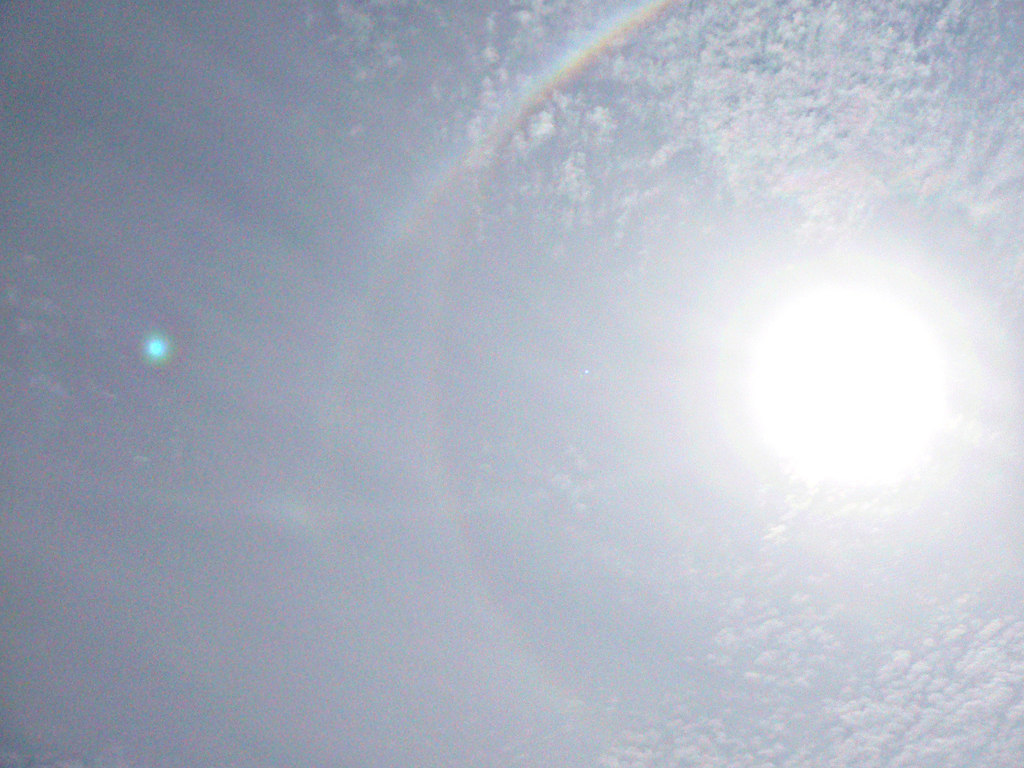
On 2 April, after a long time period, Marko Krusel also had an opportunity to observe a complex halo display in Estonia, nearby Keila. The peak time was 14:30, when the sun was 30.9 degree above the horizon and the sky was covered by cirrostratus haze. Besides all the common halos like 22° halo, upper and lower tangent arcs, parhelia, supralateral arc and CZA, he also got a bright upper suncave Parry arc, a nice full parhelic circle and 120 degree parhelia. A fragment of the infralateral arc was also seen on left. The show ended at 16:00.
Suprisingly the right side parhelic circle and 120 degree parhelion were the latest leavers ( 7 ).
6 April was a favourable day for the Czech Republic and Poland. The Czech Matej Grek (Ostrava-Dubina) and Martin Popek (Nydek) both photographed complex displays with parhelic circles and bright circumscribed halos. A 46° halo was also visible ( 8 - 9). On the same day, Jakub Marchewka also observed rare halos in Chrzanów in the south of Poland. He saw well-defined 22° halo with parhelia, circumscribed halo and full parhelic circle on cirrostratus ( 10 - 11 ). When he looked through the photos he had taken, he noticed a faint Wegener arc ( 12 and enhanced 13 ) and 46° halo ( 14 and enhanced 15 ). It was a first observation of Wegener in Poland and one of the first of 46° halos. On 20th February 1661 Johannes Hevelius observed the Gdańsk halo display and he described a 46° halo. If he was right and did not mistake it for supralateral arc and infralateral arc, Jakub Marchewka's observation is the second in Poland.
Text: Marko Krusel, Jakub Marchewka and Agnes Kiricsi
Feliratkozás:
Bejegyzések (Atom)