2008. április 4., péntek

Display in Yuzhno-Sakhalinsk


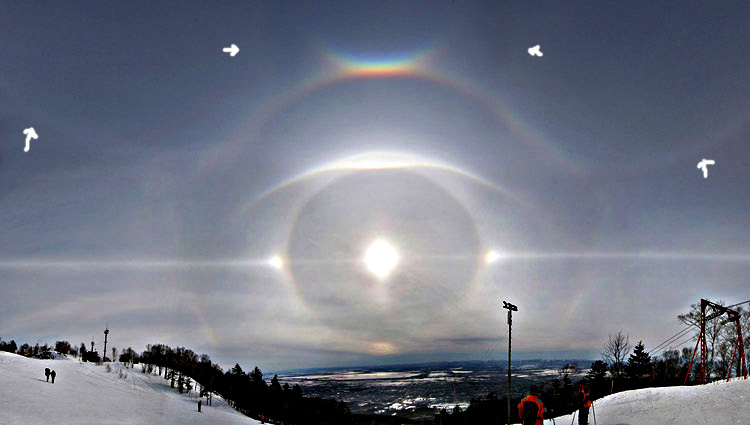
Dmitry Kuznetsov saw this complex display in Yuzhno-Sakhalinsk on 1 April 2007.
The vertical arrows in the photo denote the Wegener arc and the horizontal arrows point at faint helic arc. Dimitry described also subanthelic arc, but it is located outside the photo. More photos are also available ( 1 ).

2008. április 2., szerda

Halo vs glory

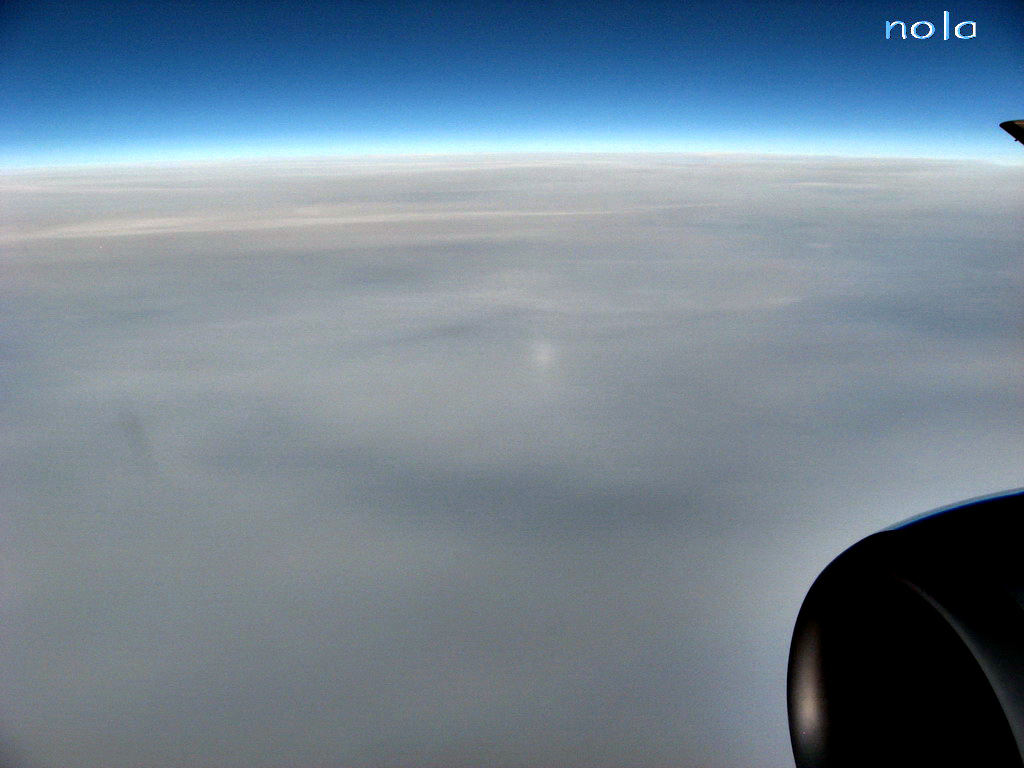
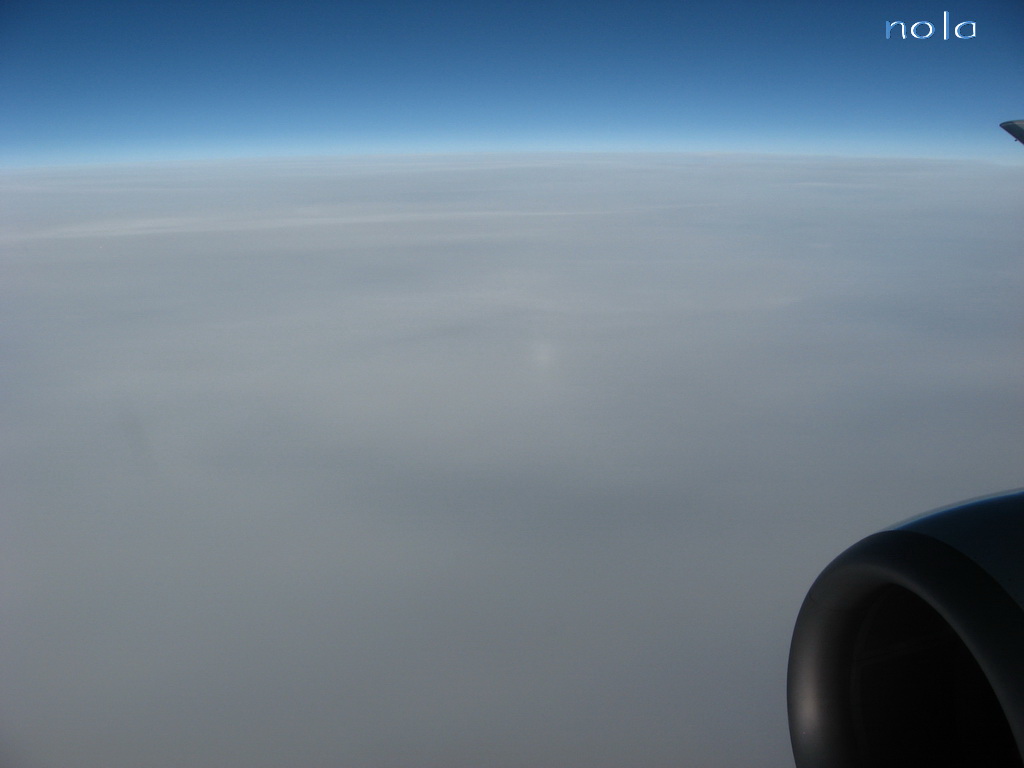
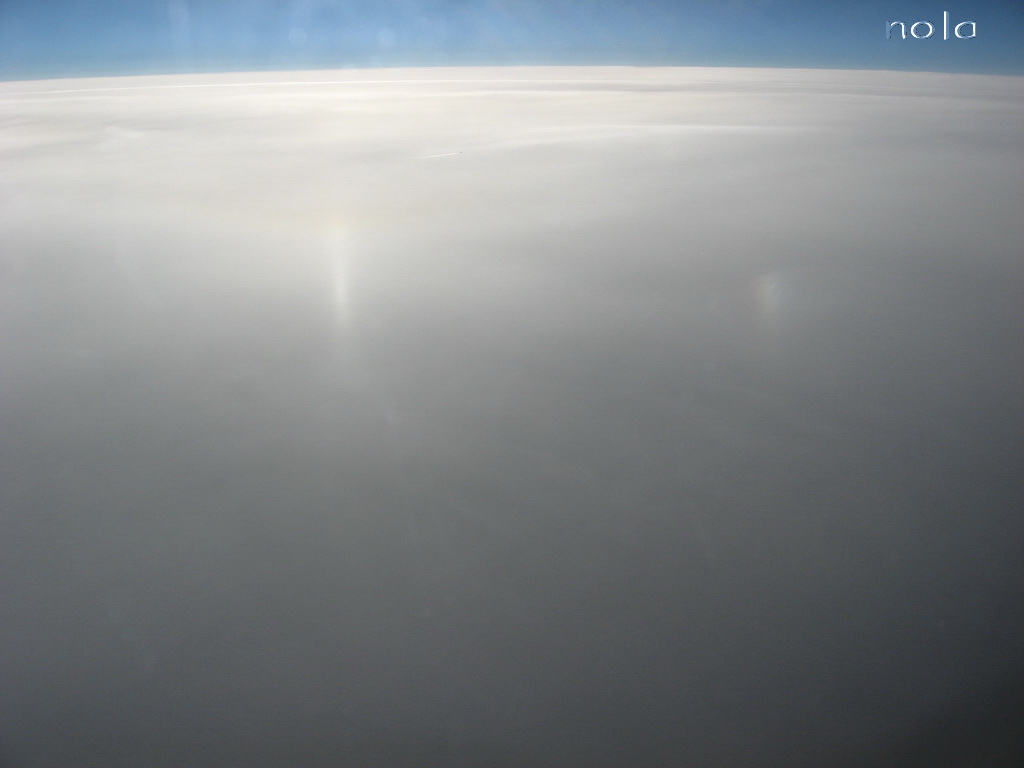
The photo above is intended to be food for thought, as it shows a rather controversial phenomenon.

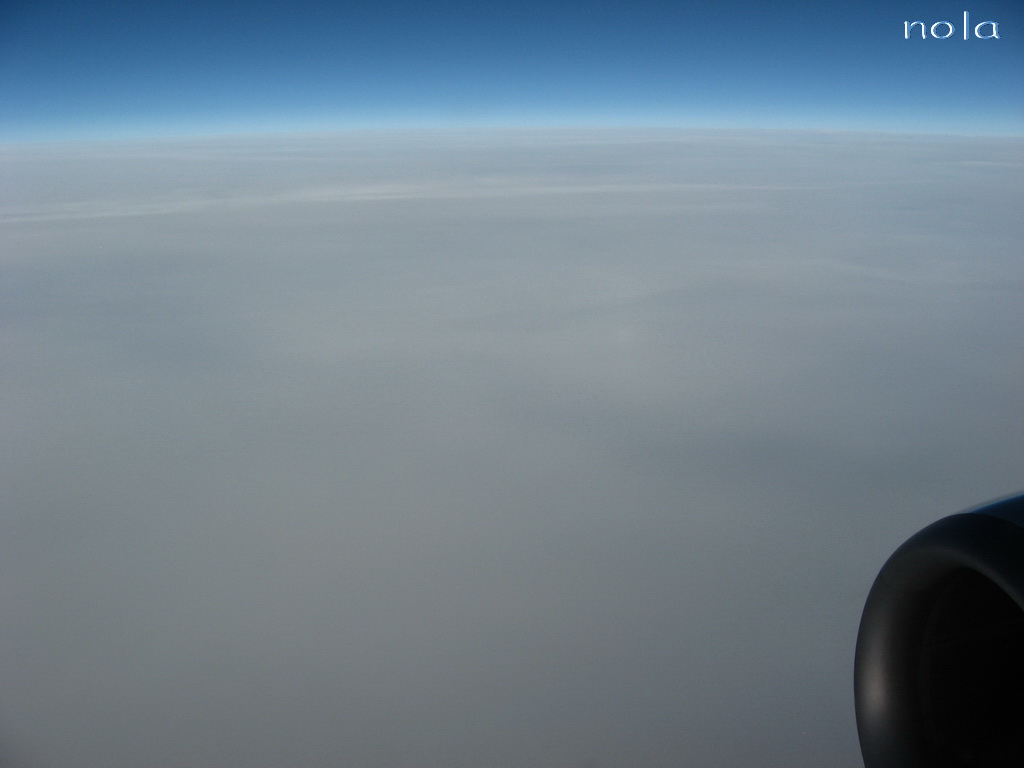
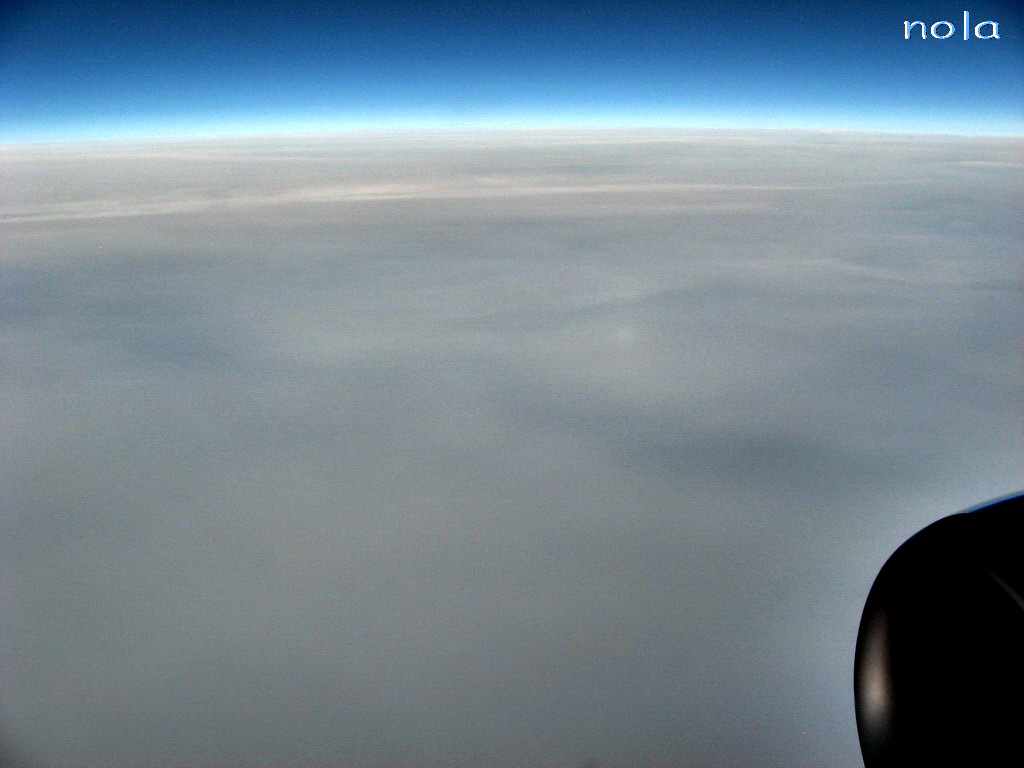
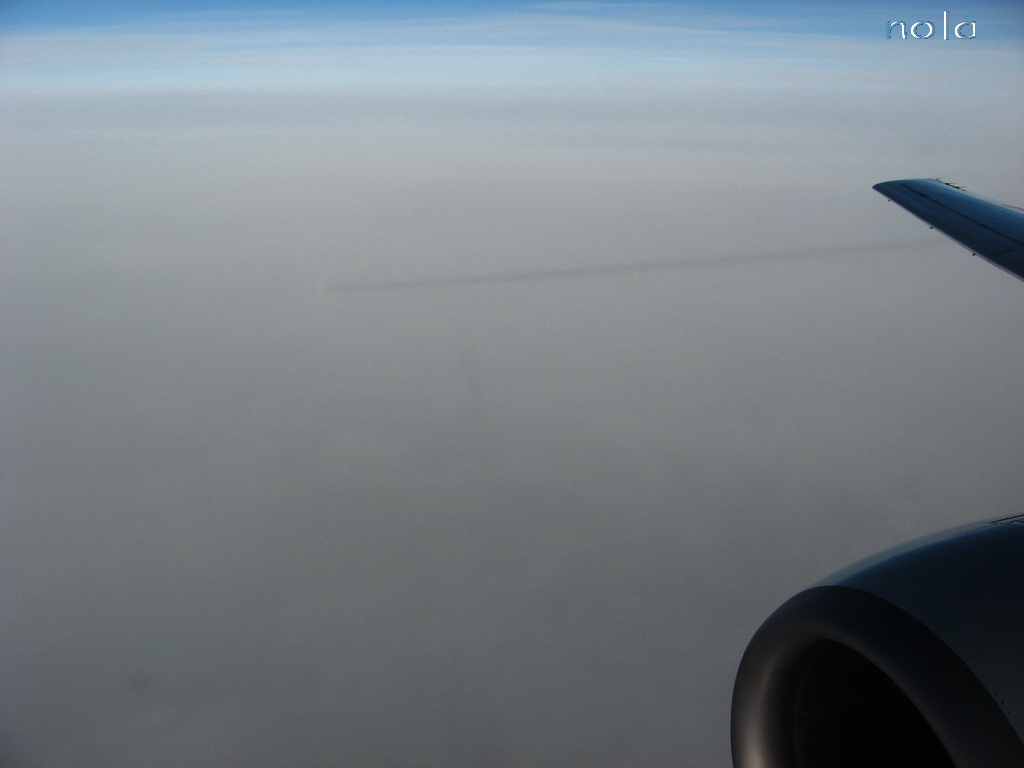
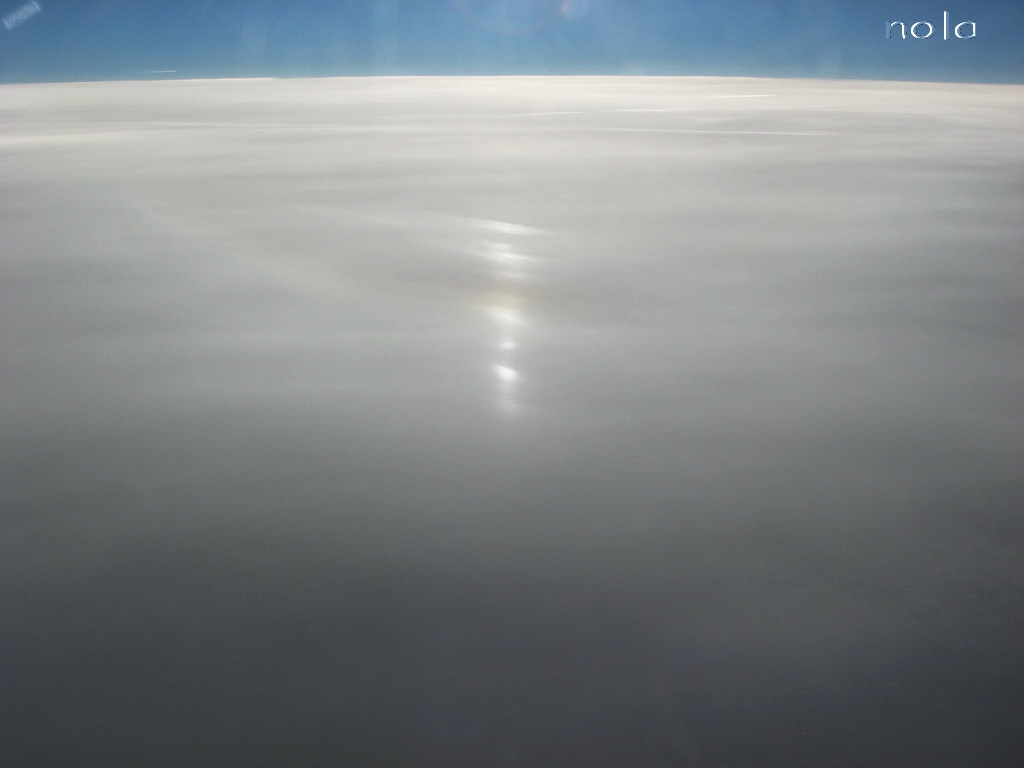
Mónika Bodó took this picture on 27 March 2008 between 16:43 – 16:46 on a flight from Athens to Budapest. As an air hostess, she flies several times a week, and very often photographs subhorizon halos and glories. This was the first time, however, when she saw such a phenomenon. For comparision, the original version of the above photo ( 1 ) and another image are also available ( 2 - 3 ).

The bright spot in the picture is at the antisolar point, the location of both the glory and the "subanthelion". A short time earlier, the shadow of the airplane had been photographed ( 4 ) and it was exactly at this point where the brightening developped. On the other side of the airplane, the bottom of the 22° halo, subsun and subparhelia were visible ( 56 ).

When the "subanthelion" is photographed, it tends to appear where the diffuse anthelic arcs forming a large X cross the subparhelic circle, and the brightening seems to be caused by the meeting of these halos. On 7 August 2006, Francesco De Comité took a photo of these antisolar halos, and there the shape of the "subanthelion" is clearly a square, thus suggesting that it is not a separate halo form, just a bright spot created by the crossing anthelic arcs ( 7 ). Another image was taken by Susanne Danßmann on 3 June 2006 ( 8 ), and one can be seen in Walt Tape's Atmospheric Halos (page 71).

What makes Mónika Bodó's observation very interesting is that even though the spot looks like a halo, the subparhelic circle does not show up in the images, and there are no other halos visible in the antisolar region. If it is really a halo, her photograph seems to show one not caused by the crossing of these arcs.

There have been other observations of a single bright spot at the antisolar point, often taken as a distant glory. It might be, however, that it is indeed an independent halo form. So far no sufficient explanation exists, suggestions and opinions are welcome.
2008. március 28., péntek

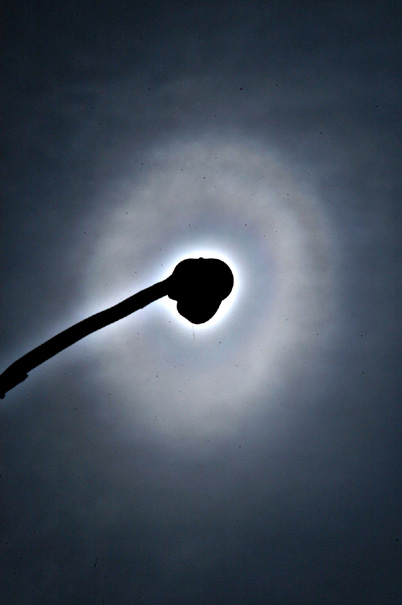
Two hour long elliptical halo display on 23 March

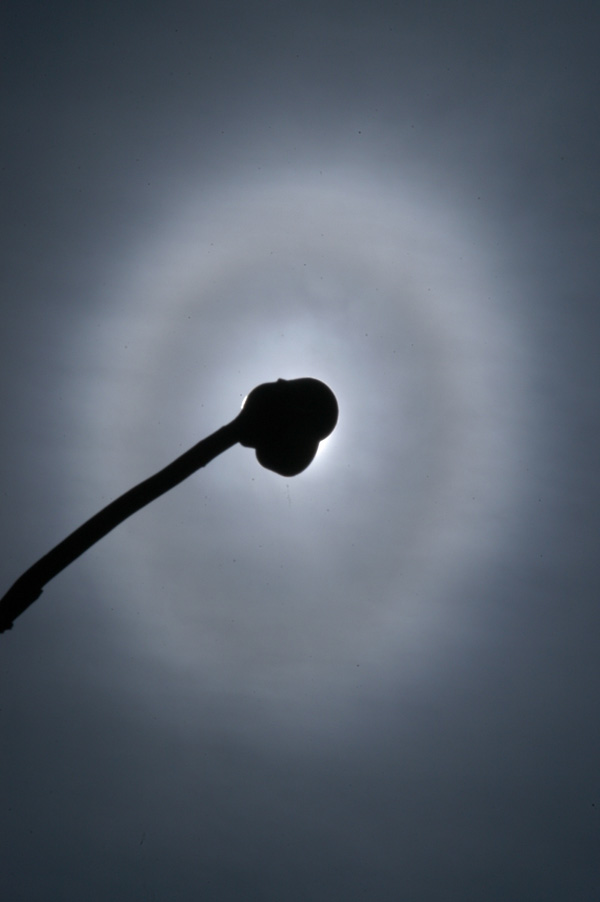
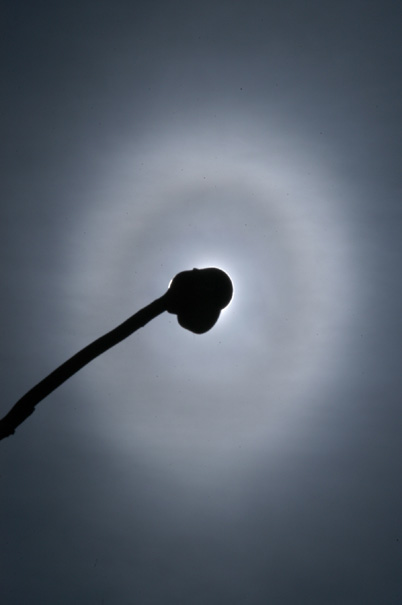
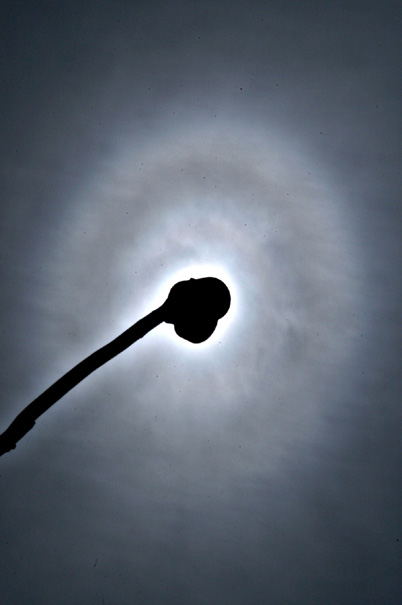
While working on a wood bowl in my workshop I noticed a lot of Altocumulus clouds that were turning into ice crystals. That meant a chance of elliptical halos. I took my camera, went for a walk, looked up and there actually was an elliptical halo! I ran like mad to get a macro lens and then used a telephone pole to shield the sun while shooting.

After about 10 minutes the halo was gone but I kept a vigil on the sky. Patience was eventually paid off as more dissipating Ac cloud moved in and the display came back.

I later positioned a large wood stick with lens case to block the sun and laid on my back and watched the show. The magic really began when a large Ac fragment passed in front of the sun and turned into ice crystals. It showed three elliptical halos at once, sharp and bright and they were colored like the classical halos ( 1 - 2 - 3 ).

The display lasted for two hours. One thing I noticed while laying on my back and taking photos was that the ellipse would start out large and then gradually shrink.

2008. március 27., csütörtök

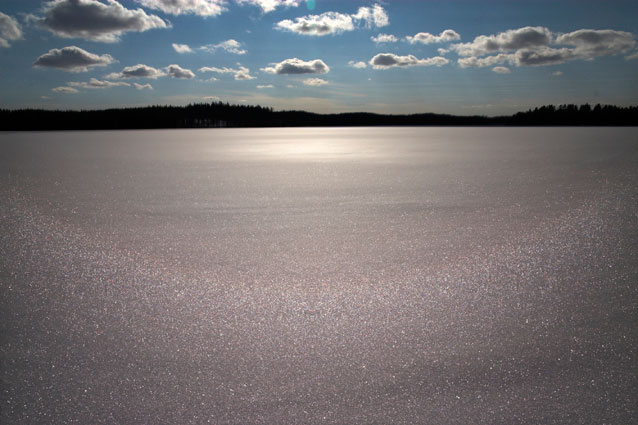
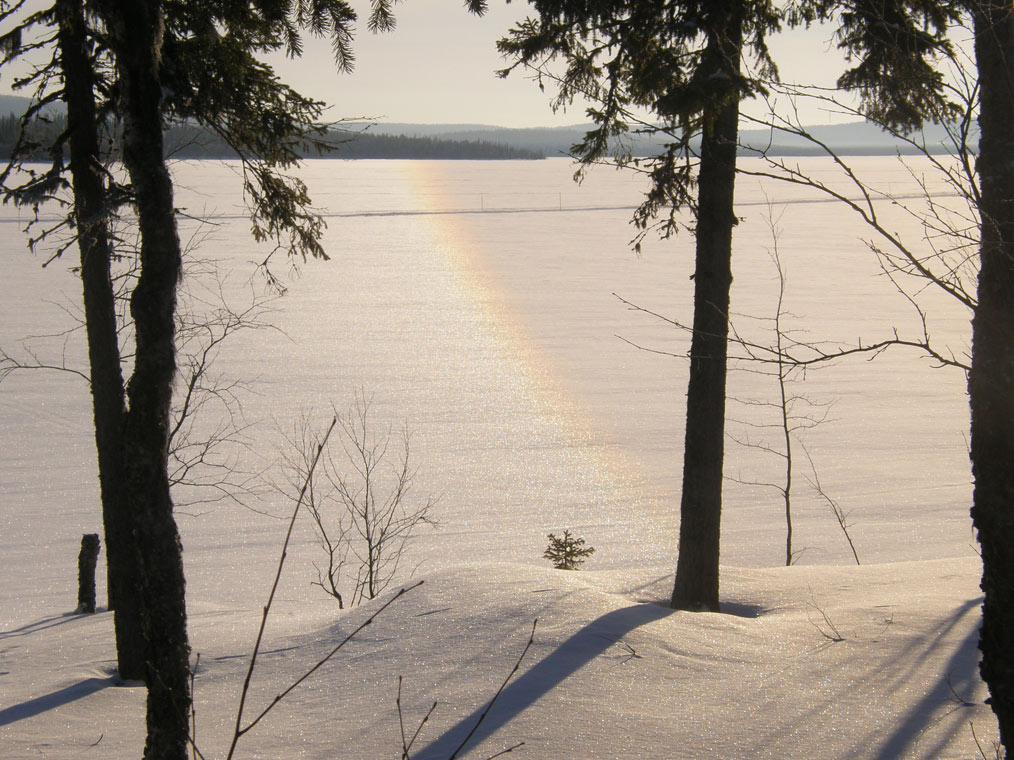
46° halo on snow surface in Juva


On 22nd March Jari Piikki photographed a 46° halo on snow surface. He took 20 photos and stacked them to come up with a photo above. The sky is from a single frame.

2008. március 26., szerda

Two halo days in the northern part of the Czech Republic

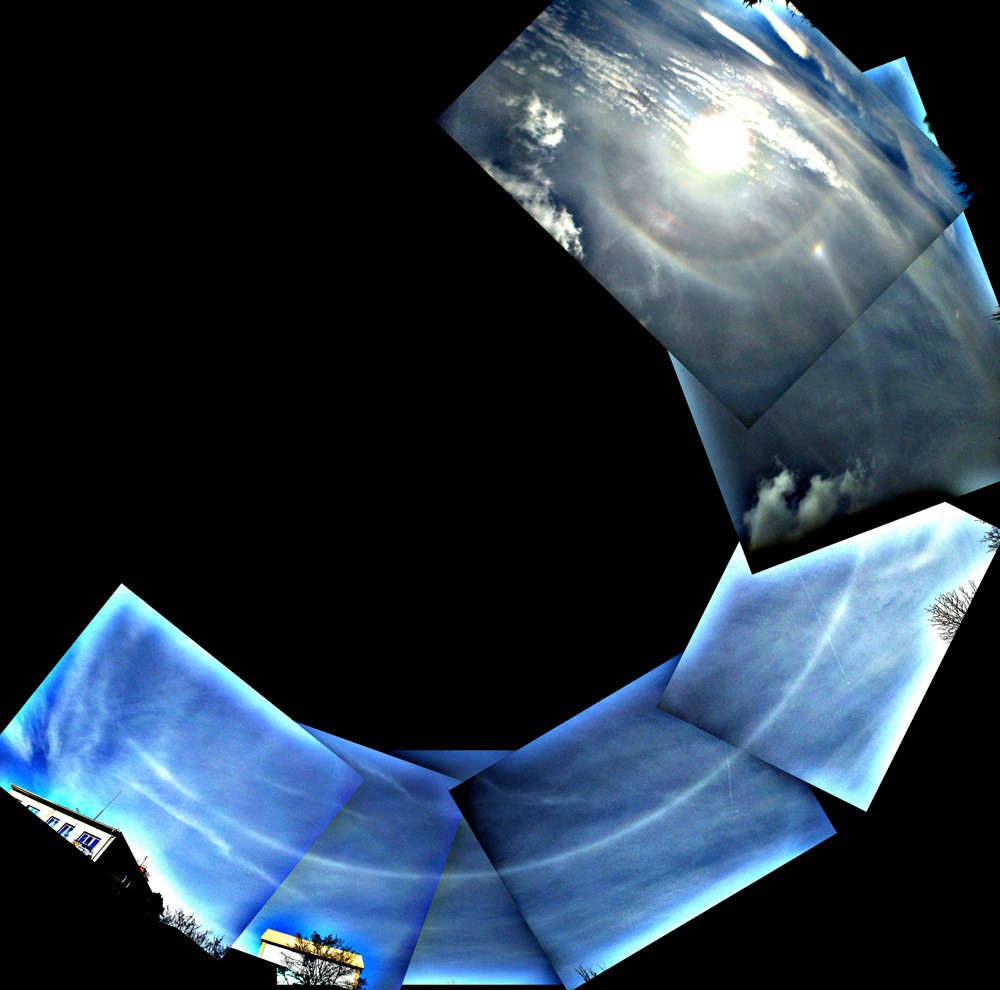
At the weekend of 15 – 16 March, observers in the northern part of the Czech Republic had some opportunity to see rare halo phenomena. On 15 March, in the afternoon, fine cirrostratus came from the west, and subsequently bright halos appeared.

Patrik Trncak took a series of photos of the display. The most uncommon halos that he observed were the Wegener arc, which crossed the parhelic circle; and the Tricker arc, which was noticed afterwards on the images processed by Registax ( 1 ).

The next day, the situation was similar, but the Wegener arc was brighter and the cirrostratus clouds lasted for a shorter period ( 2 ).

I (Martin Popek) didn’t have such good luck but I could also observe some interesting halos. On the first day, a nice suncave Parry arc was visible, which shows well on the stacked images. By the bright parhelia, Lowitz arcs appeared, and after a long period of time I saw an infralateral arc, as well ( 3 - 4 ).

On the second day, the halos were less numerous. There was only one that is not so frequent: a faint 46° halo ( 5 ). Later I observed an interesting lunar display, too, including a diffuse 9° halo ( 6 - 7 ).

Text: Martin Popek, Lukas Shrbeny

2008. március 13., csütörtök

22° halo on snow surface


Sirkka Sario took this photo in Lake Jerisjärvi, Muonio, on 5 March. Another photo is also provided ( 1 ).

2008. március 10., hétfő

Name change

Although our blog name "Halo Reports" had served reasonably well all these years, we felt it is time for a change. The blog is now "Ice Crystal Halos". The new name goes straight to the core of the things and is self explaining enough so that the subtitle was not necessary anymore.

New address for the blog is http://www.ursa.fi/blogit/ice_crystal_halos/index.php
The old address works as well. Veikko Mäkelä mastered the change so that links to photos in blog folders were updated accordingly.

Hope you feel ok with the change.