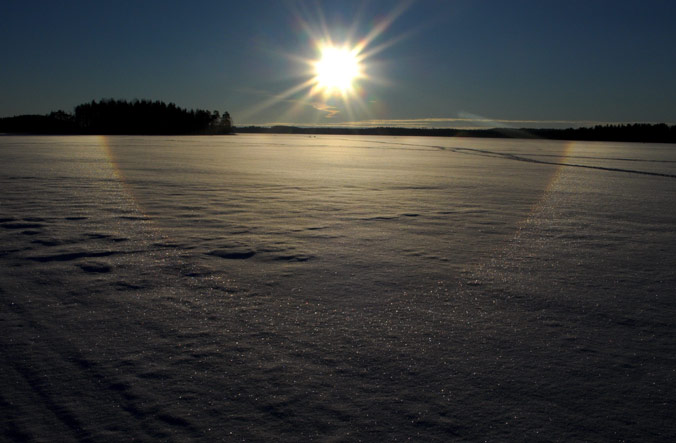
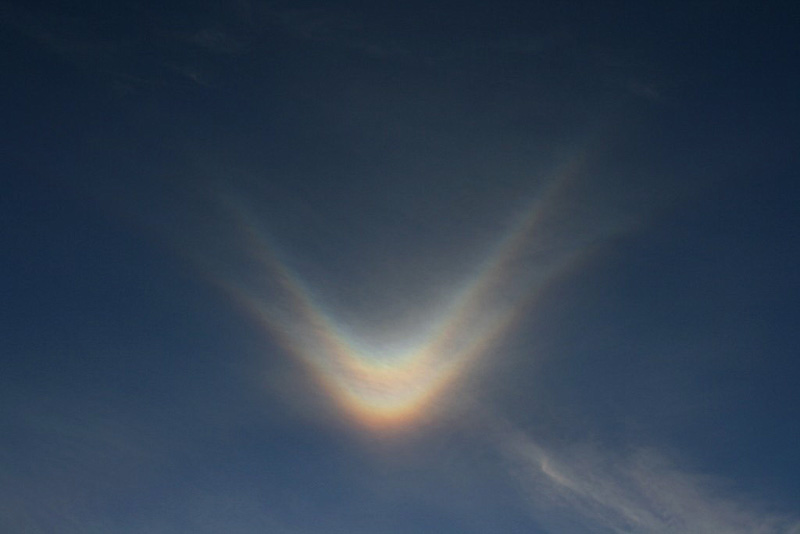
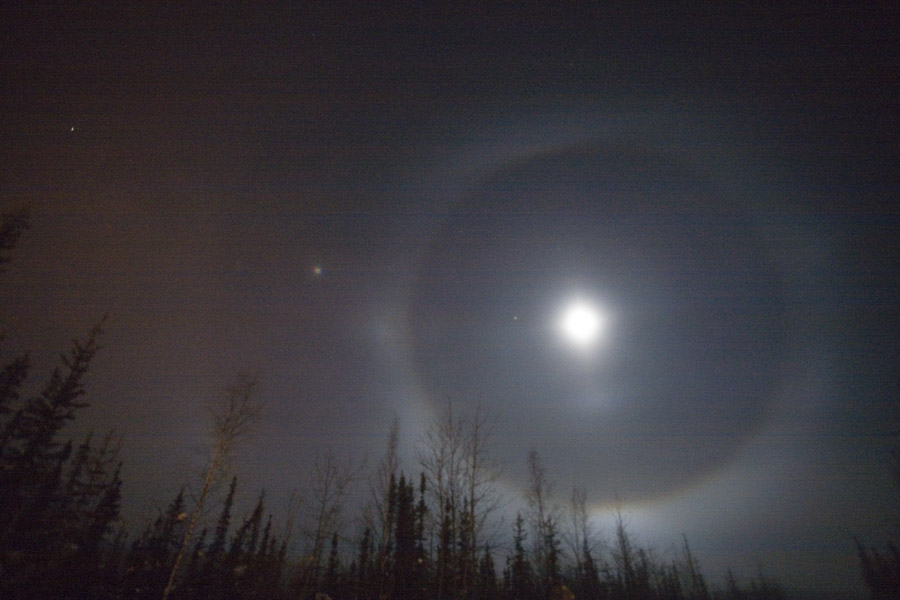
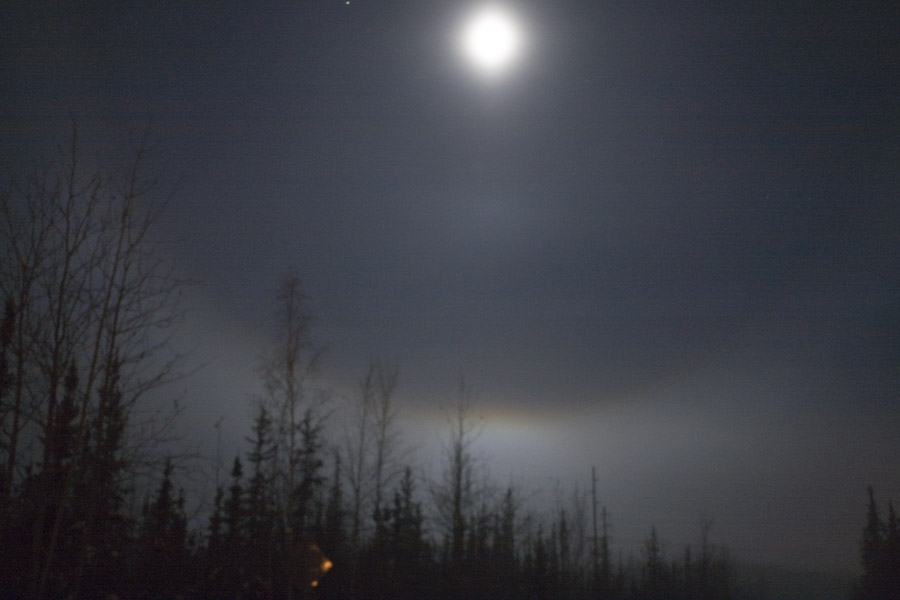
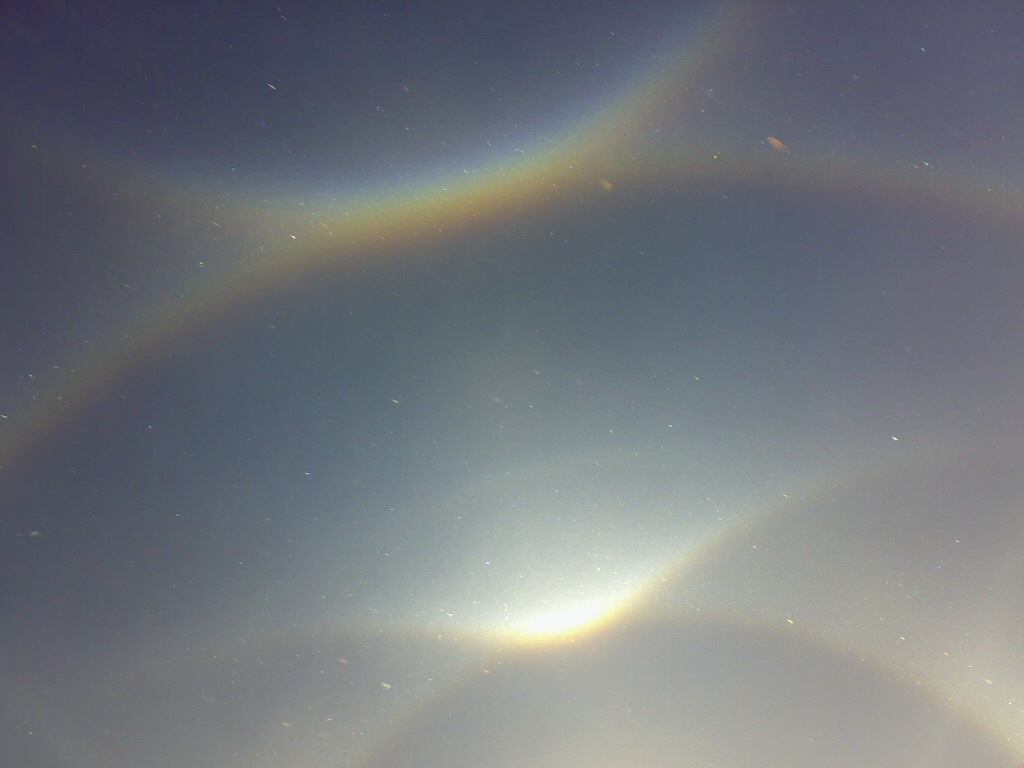
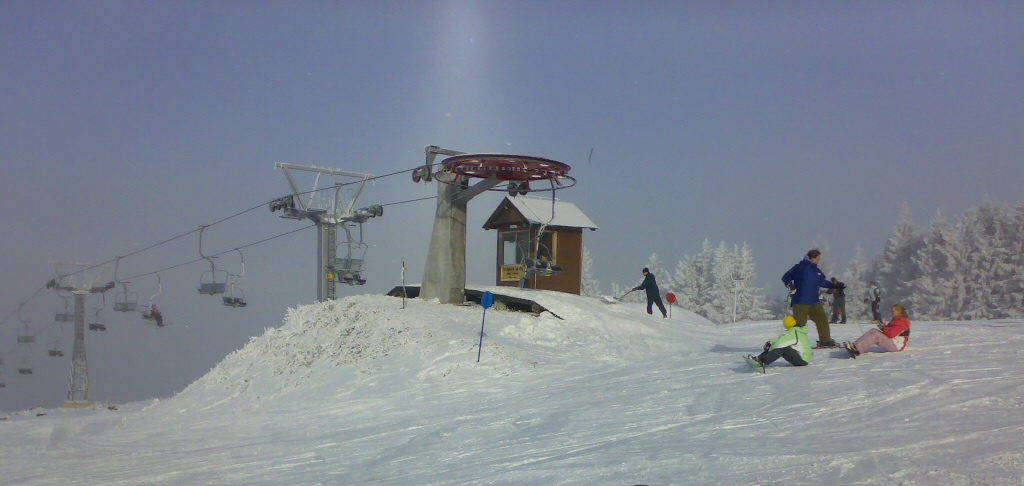
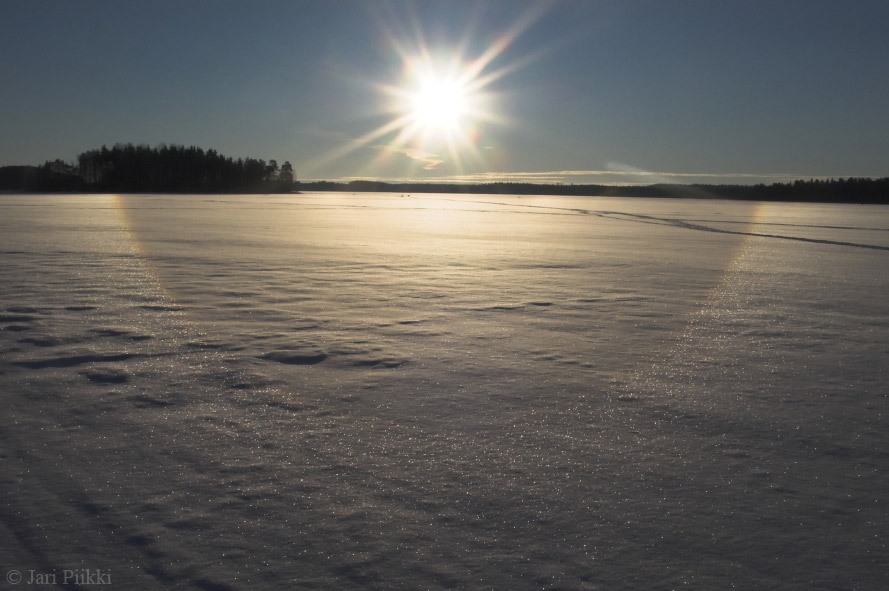
Sometimes a surface halo can be more than a couple of colored crystals forming a vague half circle on the snow. Such was the case on 8 January 2006 in Juva, where Jari Piikki photographed the display shown above.
22° halo is the dominating feature, but closer look reveal also halos from pyramid crystals. In darker version of the same image 9° halo is visible and a short patch of 24° halo is seen on the right where the 22° halo meets the forest ( 1 ).
Earlier, an odd radius halo had been observed on snow surface in Germany, where Richard Löwenherz saw 24° halo accompanying the 22° halo on 10 December 1998 ( 1 ). On 3 December 1986 in Kuopio, Finland, Juhana Hakumäki observed 9° and 22° halos on frosty window. The 22° halo was reported to have double spectrum, an indication of the presence of 24° halo.
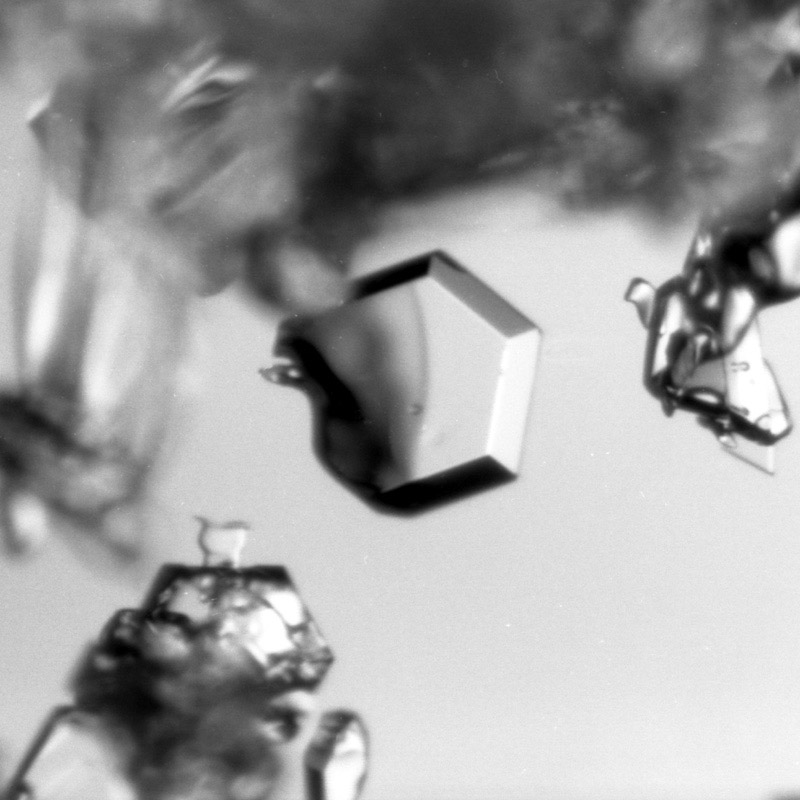
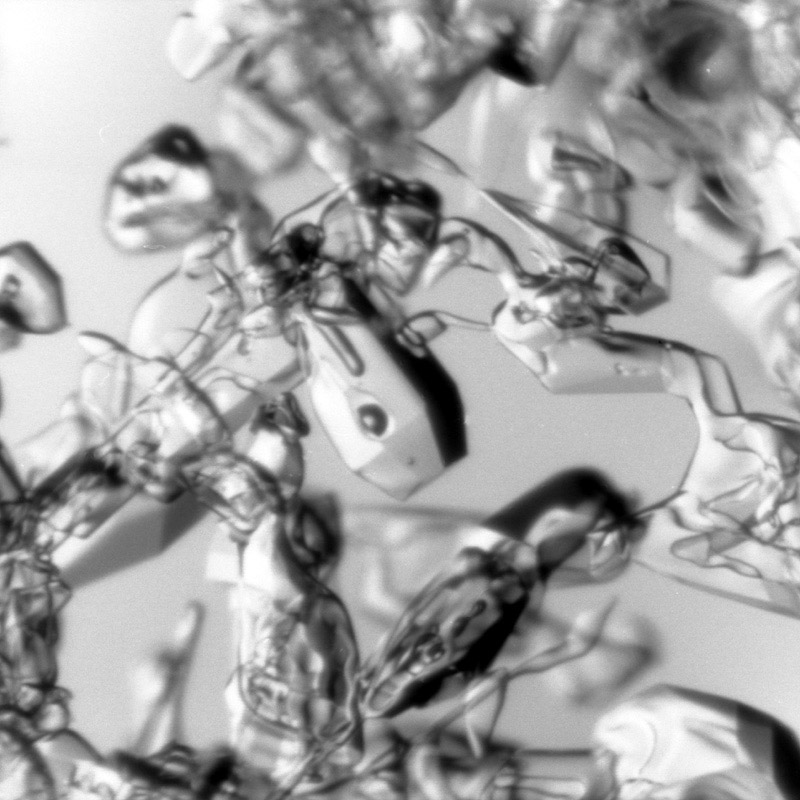
Crystal photos from surface halo displays are scarce and as far as I know none are available from the displays with odd radius halos. However, pyramid crystals have been sampled from snow surface. At South Pole in December 1998 Jarmo Moilanen decided to have a look at the snow surface composition under a microscope, and to his surprise saw pyramid crystals ( 1 - 2 ). Unfortunately sun was too high to see the possible odd radius halos.
2008. február 4., hétfő
2008. február 2., szombat
Sunvex Parry arc on Lysa hora
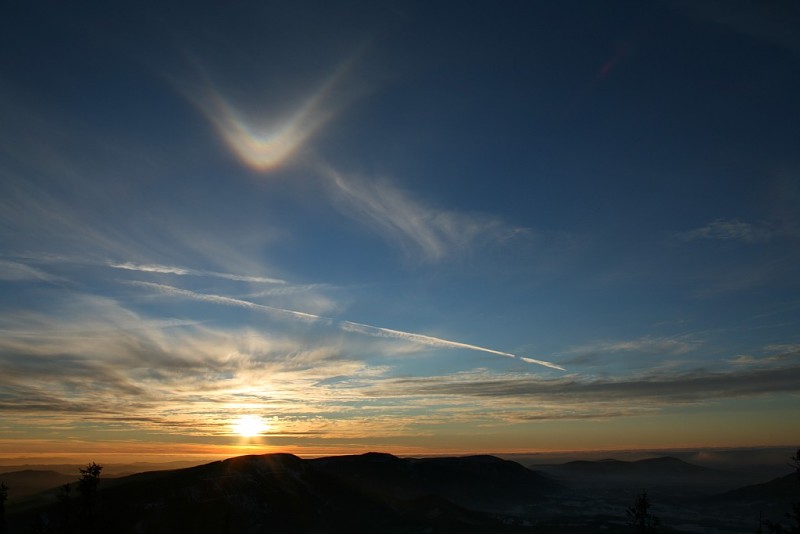
In the evening of December 22, 2007 Emil Brezina had the opportunity to observe halos on cirrostratus clouds from the top of Lysa hora, the highest peak (1323 m) of the Moravian Beskydy mountains.
Among these halos, there was an expressive sunvex Parry arc, which can compete in brightness with diamont dust halos. The development of the Parry arc and upper tangent arc was photographed between 3:17 and 3:34 pm, and further photos of the display are also available. ( 1 - 2 - 3 )
By chance I (Martin Popek) observed the same sunvex Parry arc about 20 km from Lysa hora but the quality of the photos cannot be compared. ( 1 )
Text: Martin Popek, Lukas Shrbeny
Among these halos, there was an expressive sunvex Parry arc, which can compete in brightness with diamont dust halos. The development of the Parry arc and upper tangent arc was photographed between 3:17 and 3:34 pm, and further photos of the display are also available. ( 1 - 2 - 3 )
By chance I (Martin Popek) observed the same sunvex Parry arc about 20 km from Lysa hora but the quality of the photos cannot be compared. ( 1 )
Text: Martin Popek, Lukas Shrbeny
2008. február 1., péntek
Odd radius diamond dust from Fairbanks
A one night cold snap in Fairbanks on 24 January produced the above display with halos from pyramid crystals. Let Walt Tape, who took the photo, tell more:
"The temperature was between -25 and -30 °F (-32 and -34 °C). The crystals were probably power plant products, but I am not absolutely certain of that; there was a gap in the crystal swarm that occurred between the main plume and the area of the display. I did not see the 9° or 24° arcs in the spotlight. The photo was taken on the main highway between Fairbanks and Anchorage, which was not getting heavy traffic at 5am".
Two more photos ( 1 - 2 ).
"The temperature was between -25 and -30 °F (-32 and -34 °C). The crystals were probably power plant products, but I am not absolutely certain of that; there was a gap in the crystal swarm that occurred between the main plume and the area of the display. I did not see the 9° or 24° arcs in the spotlight. The photo was taken on the main highway between Fairbanks and Anchorage, which was not getting heavy traffic at 5am".
Two more photos ( 1 - 2 ).
2008. január 30., szerda
Kern arc in searchlight beam in Kilpisjärvi
Sometimes it happens that when first photos of some halo are taken, more start piling up in the wake. This was the case for example with elliptical halos.
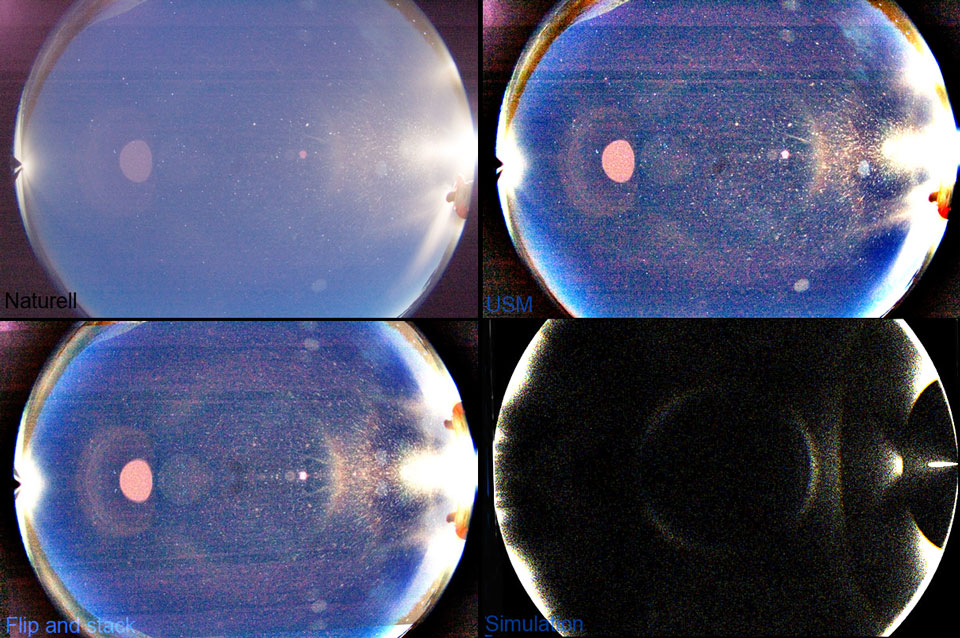
Now the Kilpisjärvi halo expedition seems to have resulted in second Kern photo, this time the light source being Cyclops X-15 spotlight instead of sun. In the images above - which are just versions of one photo - there seem to be two short arcs that match the location of the Kern arc as shown by the simulation.
The simulation (Jukka Ruoskanen's simulation software) is made for light source elevation of 0° which must be very close to the real situation. Thick h/d 0.6-1.0 regular hexagonal plates with tilts of 2° were used for the Kern arc. Thinner plates made also good Kern, but they produced additional circumzenith arc which is not seen in the photos.
In the first days and nights of diamond dust making in Kilpisjärvi we practically encountered every possible mishap. This was one of those nights. For one thing the blocker was not properly in place which resulted in lens reflections. Even worse, the lamp suddenly dimmed when the photo was taken: the battery that was supposed to be full had failed us.
So I had to increase exposure heavily afterwards in photo editing software to light up the dark photo. This resulted in excess noise and horizontal lines. To reduce the noise, mirror images of the photo were stacked ("flip and stack"). More natural versions are also given.
Upon experimenting with various crystal tilts and aspect ratios in the simulation program it became clear that Kern arc was always prominently accompanying the circumzenith arc around 0° light source elevations. From that point of view there is nothing special in Kern showing up in the photo: it must be there.
Now the Kilpisjärvi halo expedition seems to have resulted in second Kern photo, this time the light source being Cyclops X-15 spotlight instead of sun. In the images above - which are just versions of one photo - there seem to be two short arcs that match the location of the Kern arc as shown by the simulation.
The simulation (Jukka Ruoskanen's simulation software) is made for light source elevation of 0° which must be very close to the real situation. Thick h/d 0.6-1.0 regular hexagonal plates with tilts of 2° were used for the Kern arc. Thinner plates made also good Kern, but they produced additional circumzenith arc which is not seen in the photos.
In the first days and nights of diamond dust making in Kilpisjärvi we practically encountered every possible mishap. This was one of those nights. For one thing the blocker was not properly in place which resulted in lens reflections. Even worse, the lamp suddenly dimmed when the photo was taken: the battery that was supposed to be full had failed us.
So I had to increase exposure heavily afterwards in photo editing software to light up the dark photo. This resulted in excess noise and horizontal lines. To reduce the noise, mirror images of the photo were stacked ("flip and stack"). More natural versions are also given.
Upon experimenting with various crystal tilts and aspect ratios in the simulation program it became clear that Kern arc was always prominently accompanying the circumzenith arc around 0° light source elevations. From that point of view there is nothing special in Kern showing up in the photo: it must be there.
Complex halo display in Destne
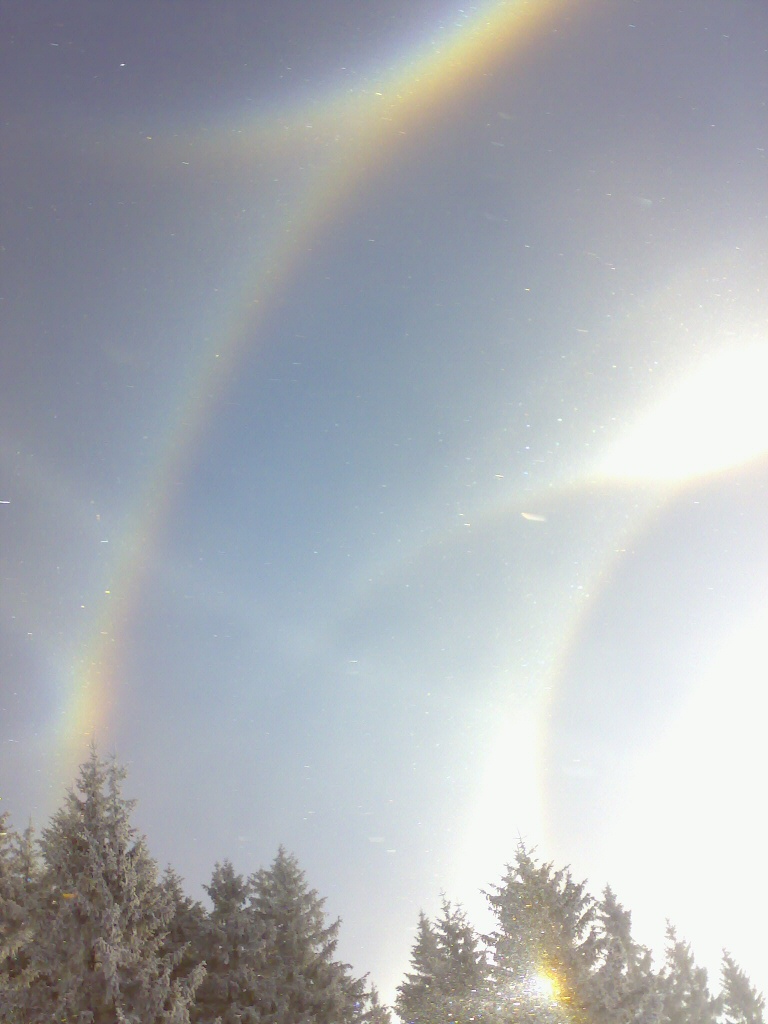
One of the most striking halo displays of recent years in the Czech Republic was observed on December 25, 2007 in Destne in the Orlicke Mountains. Diamond dust halo phenomena highlighted the sky shortly after 12 local time (CET) and lasted until sunset.
While skiing, Radek Svoboda took several shots with his cell phone camera and captured a variety of halos including ones like Tape arc (Parry supralateral arc) and heliac arc, as shown by the photo beside. See also another image.
After the inspection of rest of the photos, even diffuse arcs turned up.
Some of the images are featured in the gallery, other uploaded halo photographs of Czech observers can be instantly browsed on the latest uploads page.
Text: Tomas Trzicky
While skiing, Radek Svoboda took several shots with his cell phone camera and captured a variety of halos including ones like Tape arc (Parry supralateral arc) and heliac arc, as shown by the photo beside. See also another image.
After the inspection of rest of the photos, even diffuse arcs turned up.
Some of the images are featured in the gallery, other uploaded halo photographs of Czech observers can be instantly browsed on the latest uploads page.
Text: Tomas Trzicky
2008. január 29., kedd
Well defined Moilanen arc in Viitasaari
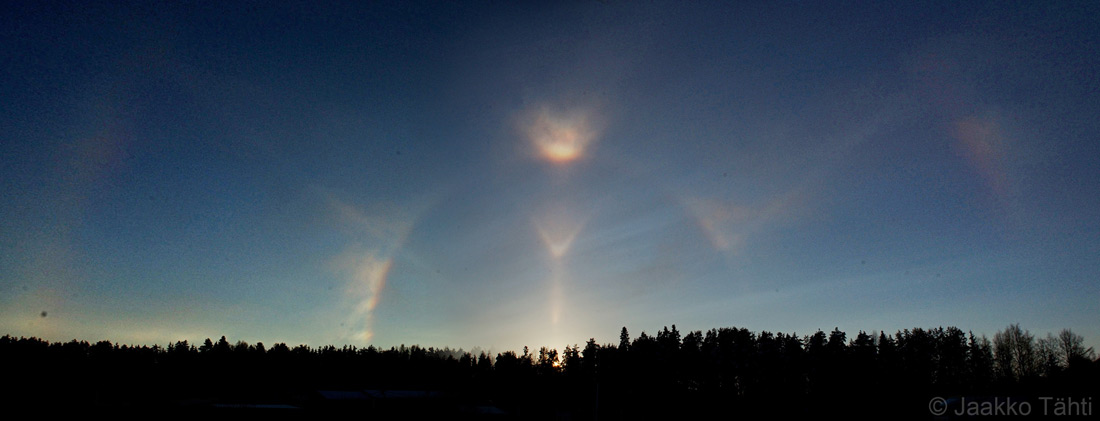
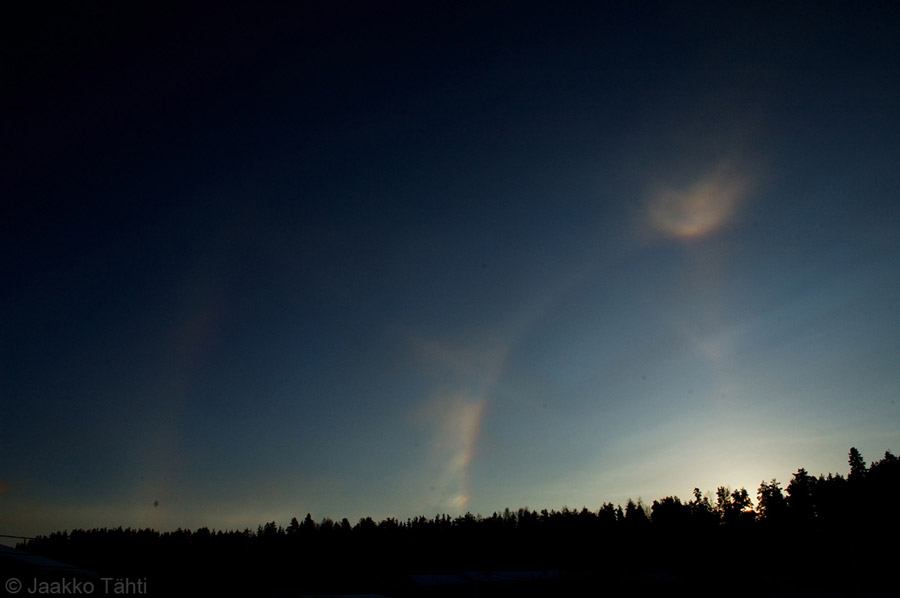
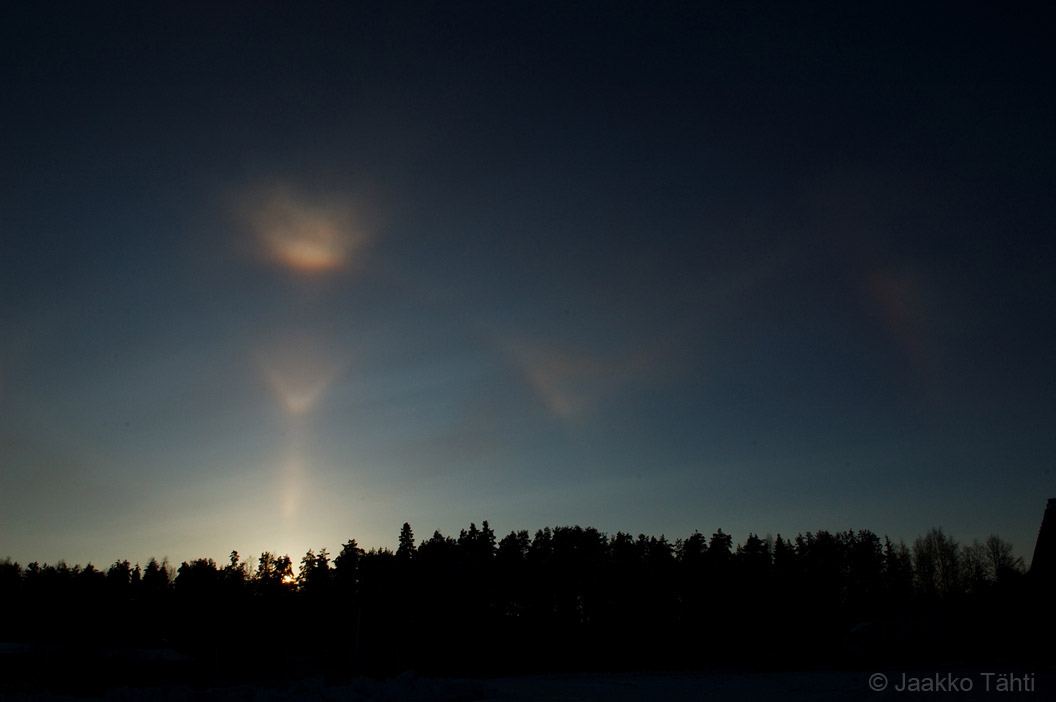
On 23 January Jaakko Tähti was doing product photography in a factory in Viitasaari when he got a phonecall that there was a good halo display in the sky. He could not get outside but had a look at the display from factory window. An hour later, at 13:45, Tähti finally got a chance to go out and took photos from which the above panorama was made.
The halos in the display are the usual ones for snow gun generated displays (ski center was nearby), but the razor sharp form of the Moilanen arc is of a better class. Crystal samples from these kind of appearances could be useful in unveiling the mystery that shrouds the Moilanen arc formation.
Here are four single photos of the display ( 1 - 2 - 3 - 4 ).
The halos in the display are the usual ones for snow gun generated displays (ski center was nearby), but the razor sharp form of the Moilanen arc is of a better class. Crystal samples from these kind of appearances could be useful in unveiling the mystery that shrouds the Moilanen arc formation.
Here are four single photos of the display ( 1 - 2 - 3 - 4 ).
2008. január 28., hétfő
Making halos in Kilpisjärvi
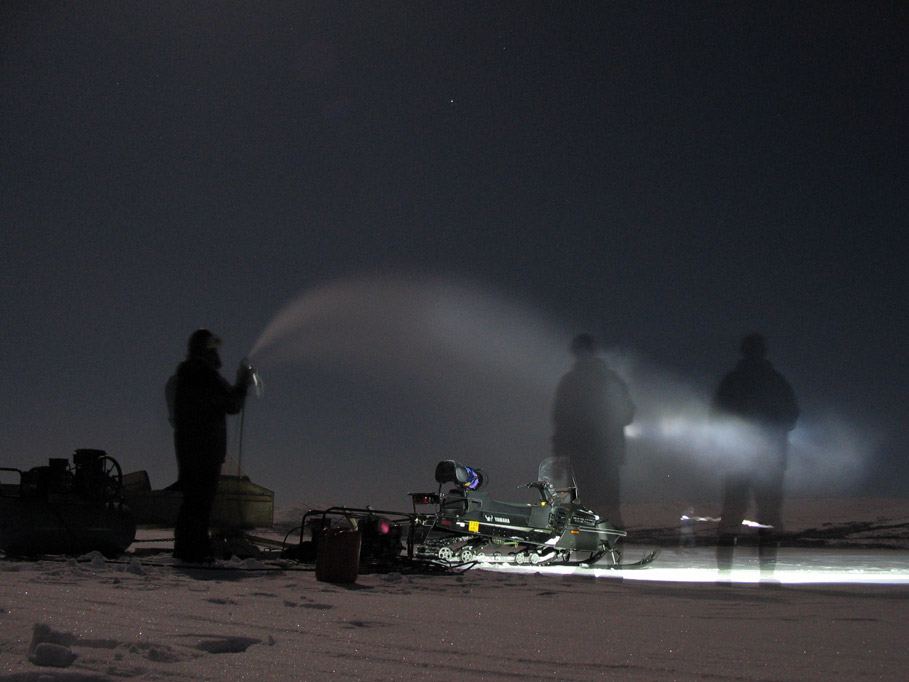
On 19th January the four of us, Jukka Ruoskanen, Marko Mikkilä, Ágnes Kiricsi and Marko Riikonen gathered at the Kilpisjärvi biological station in northern Finland to make halos. We had got some evidence that weather conditions in the Kilpisjärvi area might be favourable for ice crystal formation as long as the nuclei are provided. At his home, Marko Mikkilä had already done successful initial experiments of creating halos with a mixture of kaolin and water sprayed in the air, and this time we wanted to do more tests on the system.
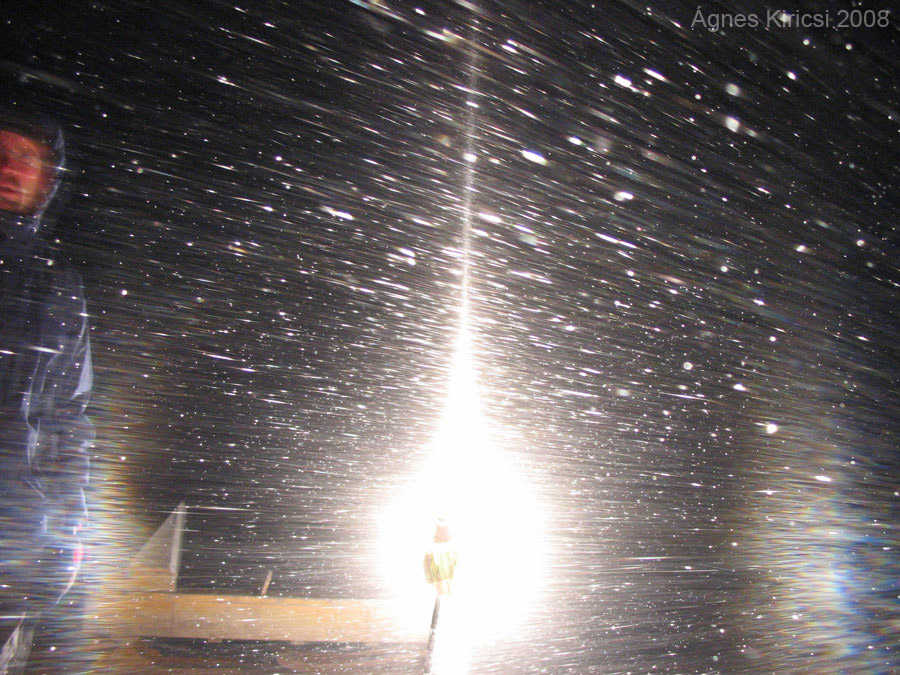
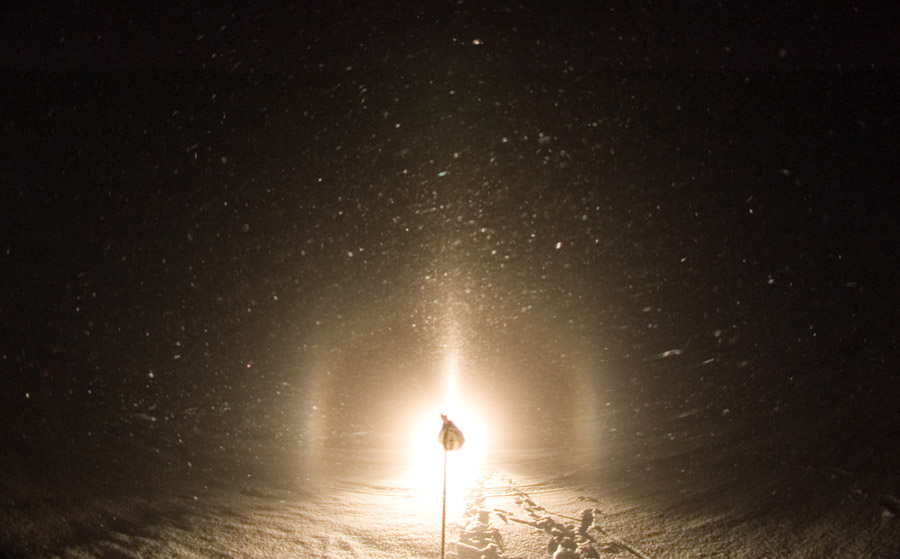
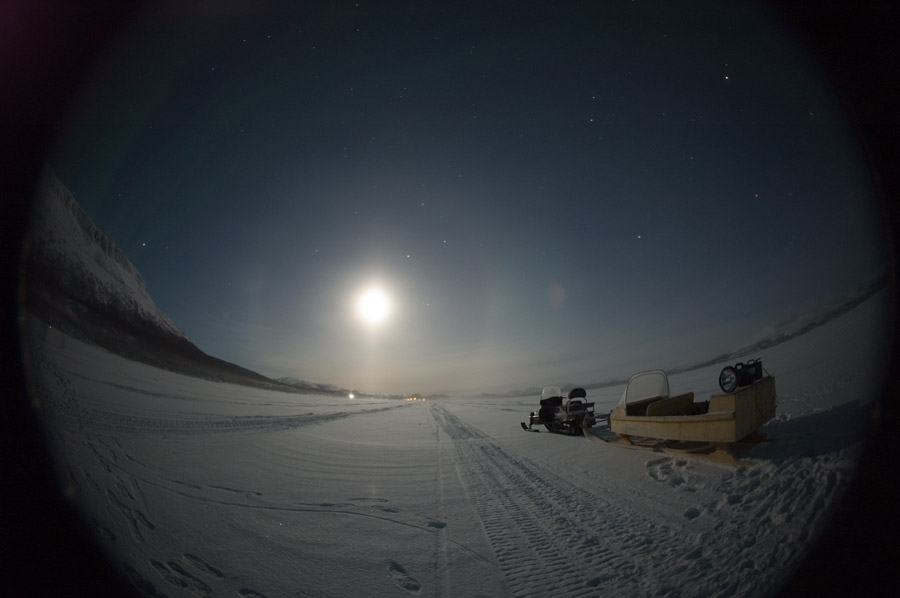
During our one-week stay, we were able to create displays on two days and three nights, the temperatures being around -20 °C. The diamond dust cloud that developed seemed to be kilometres wide. This was accomplished with only about 10 litres of water and two spoonfuls of kaolin. The crystal swarm usually lasted about half an hour and then it was time to go back to spray more ( 1 – 2 ). On one night we succeeded in making halos 12 hours continuously.
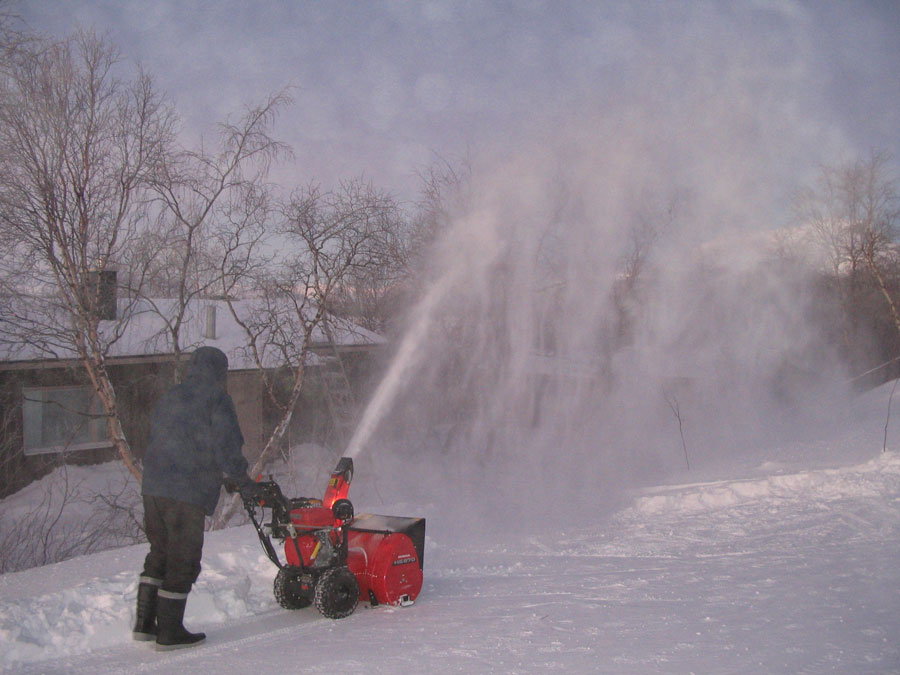
We also tested a snow blower. A good display had been observed ten years ago in Resolute Bay created by such a machine (see drawings in Sivuaurinko 3/98 on pages 9 and 10). Our impression was, however, that it was not nearly as good as kaolin, and we eventually quit using it.
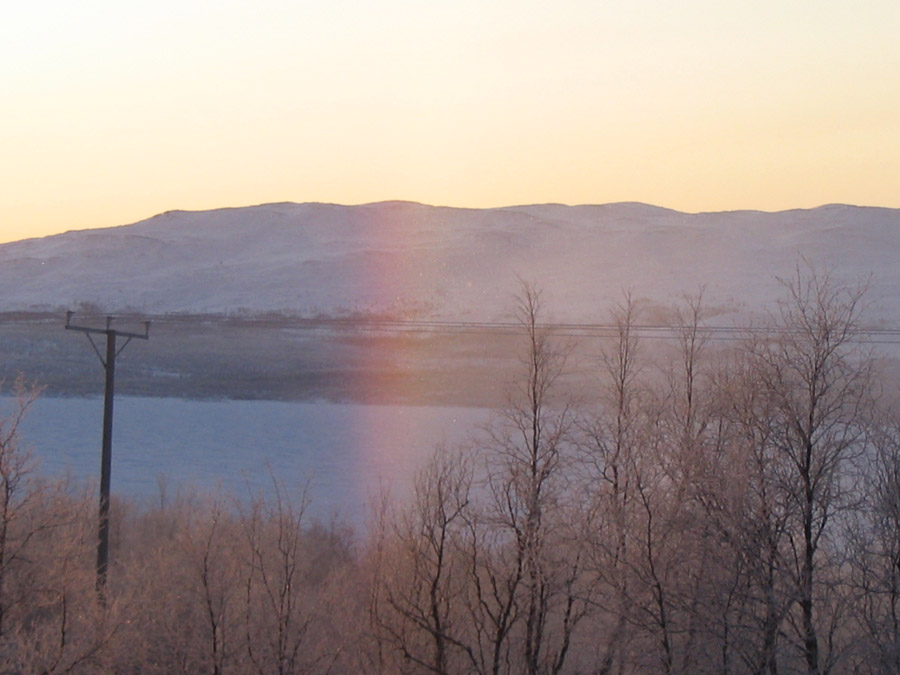
Mostly we had plate displays ( 1 - 2 ), but on two nights at the beginning of the favourable conditions there were also halos from column and Parry oriented crystals. Diffuse arcs and upper sunvex Parry arc were seen. Moilanen arc was present only on one night for a short while.
We also tried spraying water mixed with montmorillonite (also known as bentonite) on one day and managed to create a weak plate display. This clay mineral is referred to be an even better nucleator than kaolin, but we found its use problematic because of its clumping habit.
After each spraying round photographing the halos was sort of a hassle, there was not much time for fine tuning. The next step in halo making is to have a continuous automated feed of the nucleating mixture. Then the real fun can start.
Text: Ágnes Kiricsi, Marko Riikonen
During our one-week stay, we were able to create displays on two days and three nights, the temperatures being around -20 °C. The diamond dust cloud that developed seemed to be kilometres wide. This was accomplished with only about 10 litres of water and two spoonfuls of kaolin. The crystal swarm usually lasted about half an hour and then it was time to go back to spray more ( 1 – 2 ). On one night we succeeded in making halos 12 hours continuously.
We also tested a snow blower. A good display had been observed ten years ago in Resolute Bay created by such a machine (see drawings in Sivuaurinko 3/98 on pages 9 and 10). Our impression was, however, that it was not nearly as good as kaolin, and we eventually quit using it.
Mostly we had plate displays ( 1 - 2 ), but on two nights at the beginning of the favourable conditions there were also halos from column and Parry oriented crystals. Diffuse arcs and upper sunvex Parry arc were seen. Moilanen arc was present only on one night for a short while.
We also tried spraying water mixed with montmorillonite (also known as bentonite) on one day and managed to create a weak plate display. This clay mineral is referred to be an even better nucleator than kaolin, but we found its use problematic because of its clumping habit.
After each spraying round photographing the halos was sort of a hassle, there was not much time for fine tuning. The next step in halo making is to have a continuous automated feed of the nucleating mixture. Then the real fun can start.
Text: Ágnes Kiricsi, Marko Riikonen
Feliratkozás:
Bejegyzések (Atom)