2007. október 21., vasárnap

Elliptical Halo in Vecsés, Hungary


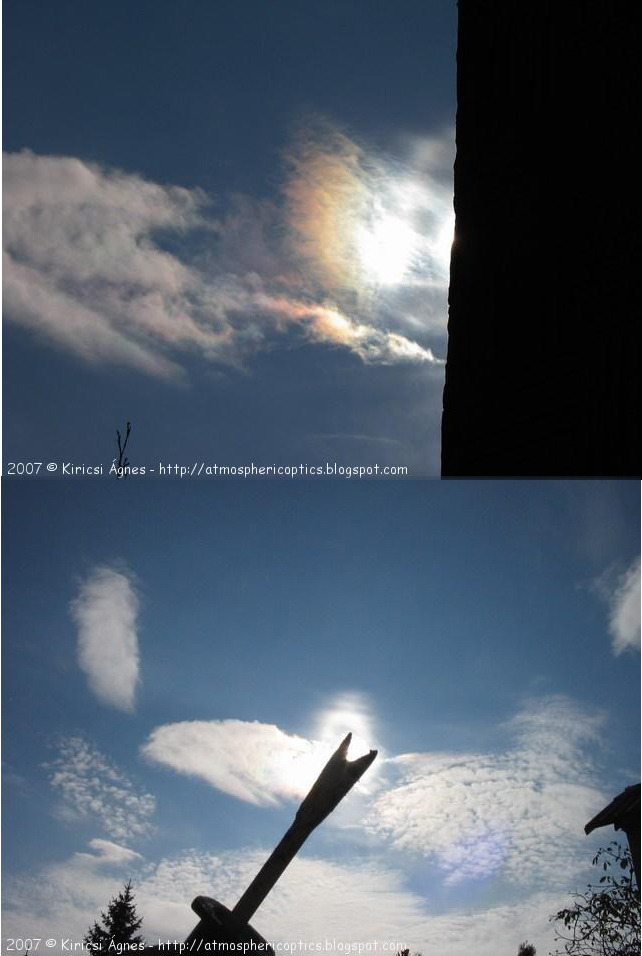
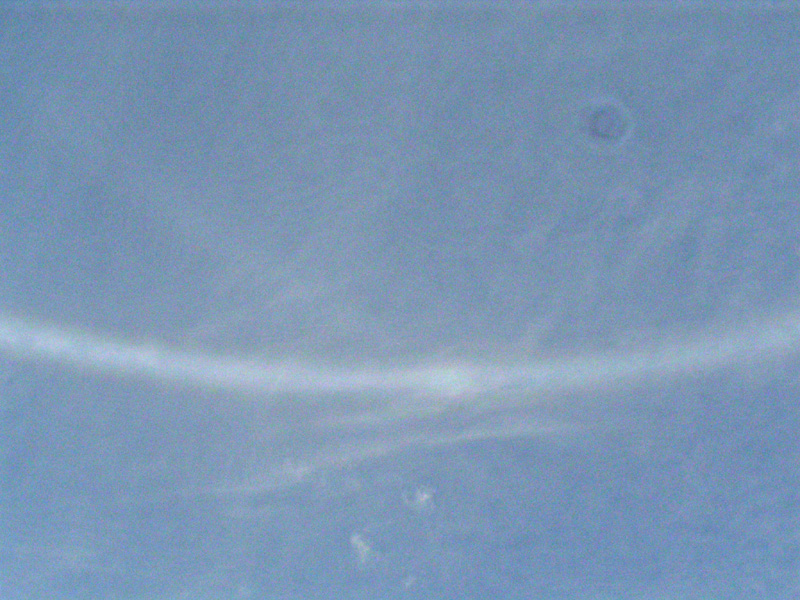
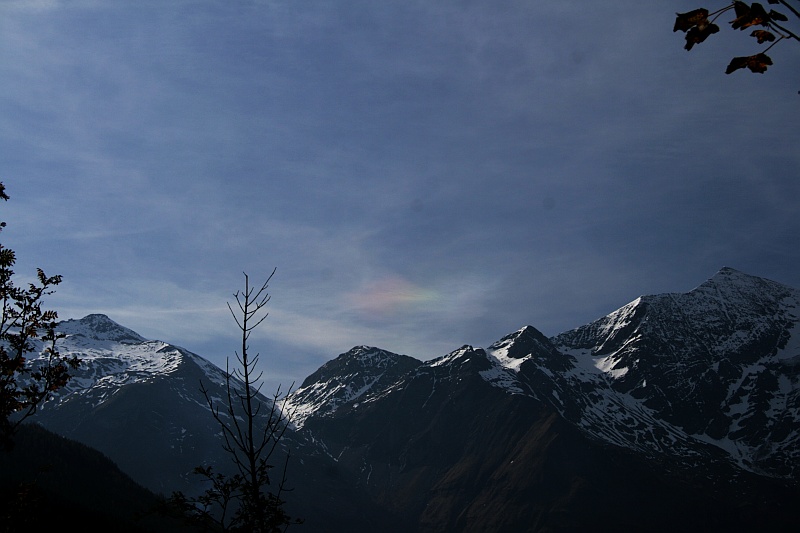
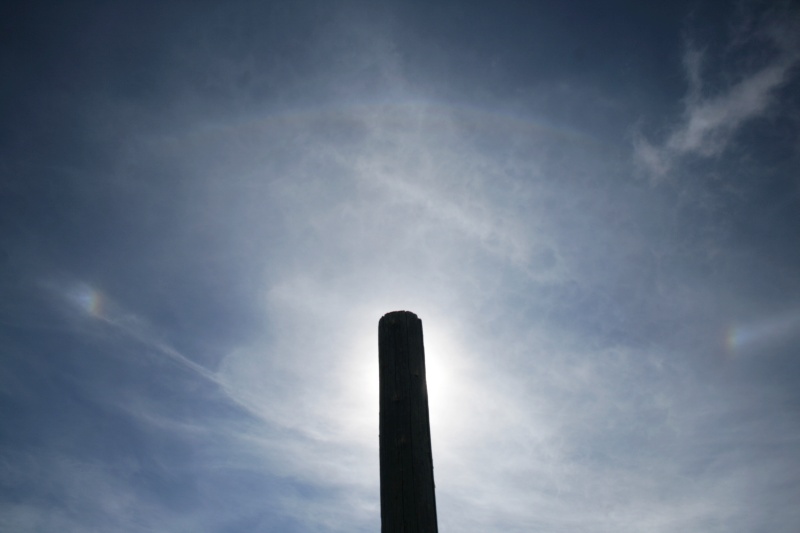
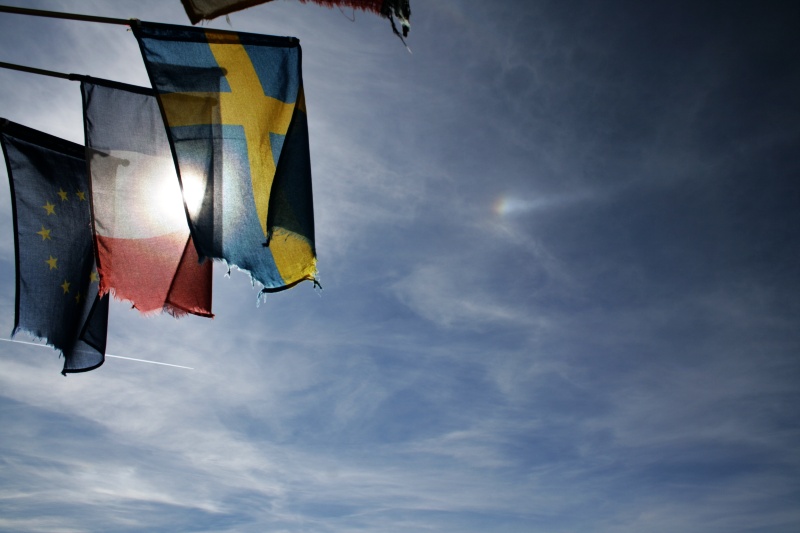
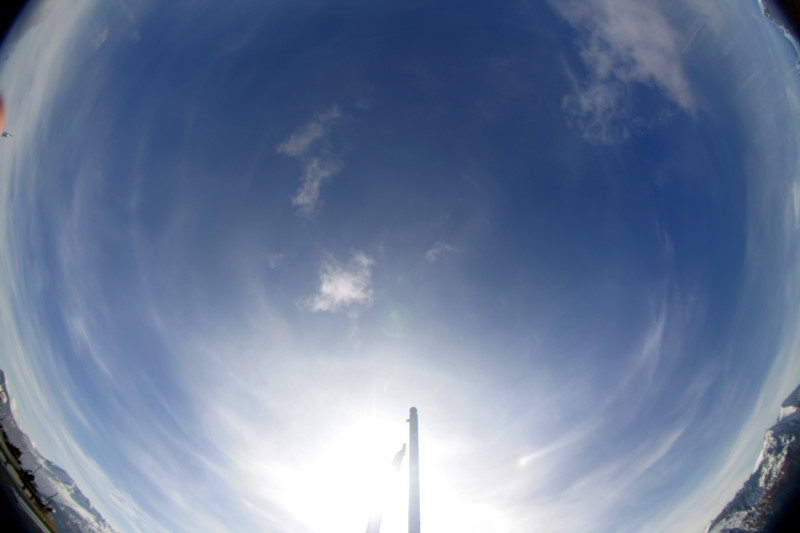
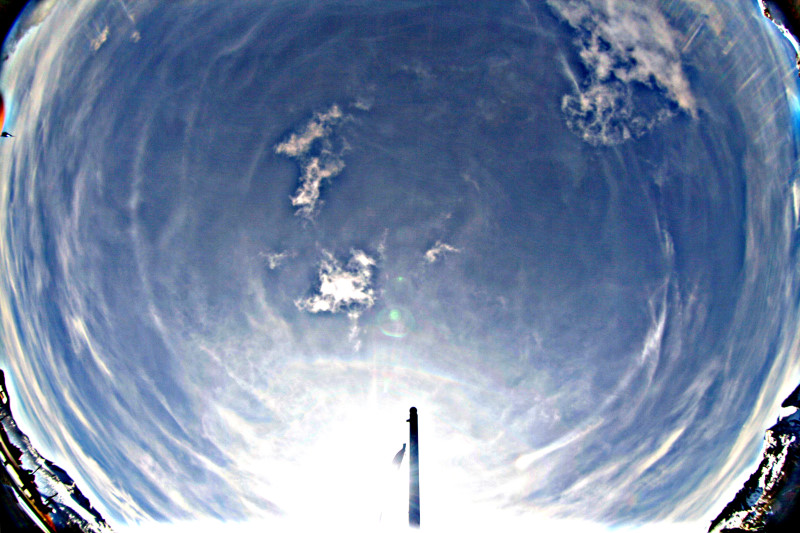
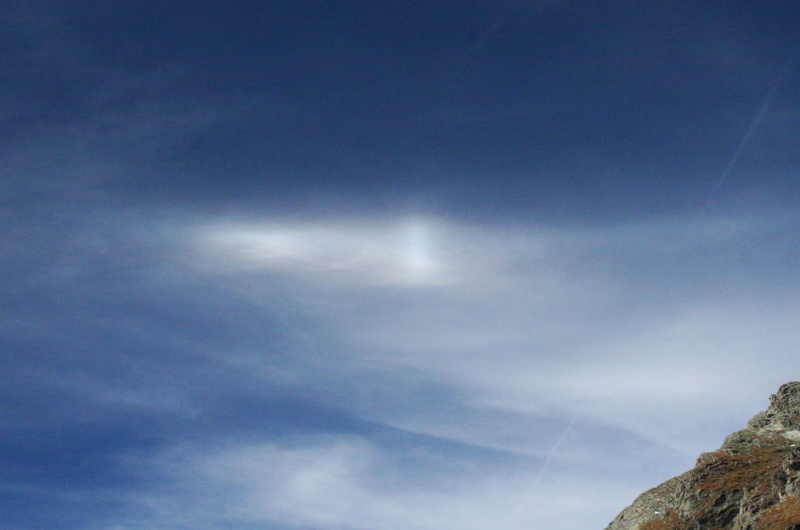
Today on 21st October at 11:27 local time I saw this elliptical halo above Vecsés, Hungary. I was photographing Ac len and iridescent Ac clouds, when I caught sight of the display. The elliptical halo formed on the ice crystal precipitation of one of the Ac. The display lasted less than two minutes, so I really had to hurry to find a good object to shield the Sun with, and not to miss the sight meanwhile. In the first photo - I was still using the neighbouring house's wall, - even the reddish inner side of the halo can be seen. More photos.

Elliptical halo in Vecsés, Hungary


Today on 21st October at 11:27 local time I saw this elliptical halo above Vecsés, Hungary. I was photographing Ac len and iridescent Ac clouds, when I caught sight of the display. The elliptical halo formed on the ice crystal precipitation of one of the Ac. The display lasted less than two minutes, so I really had to hurry to find a good object to shield the Sun with, and not to miss the sight meanwhile. In the first photo - I was still using the neighbouring house's wall, - even the reddish inner side of the halo can be seen. More photos are also available ( 1 )

Austrian halo display with Parry arc


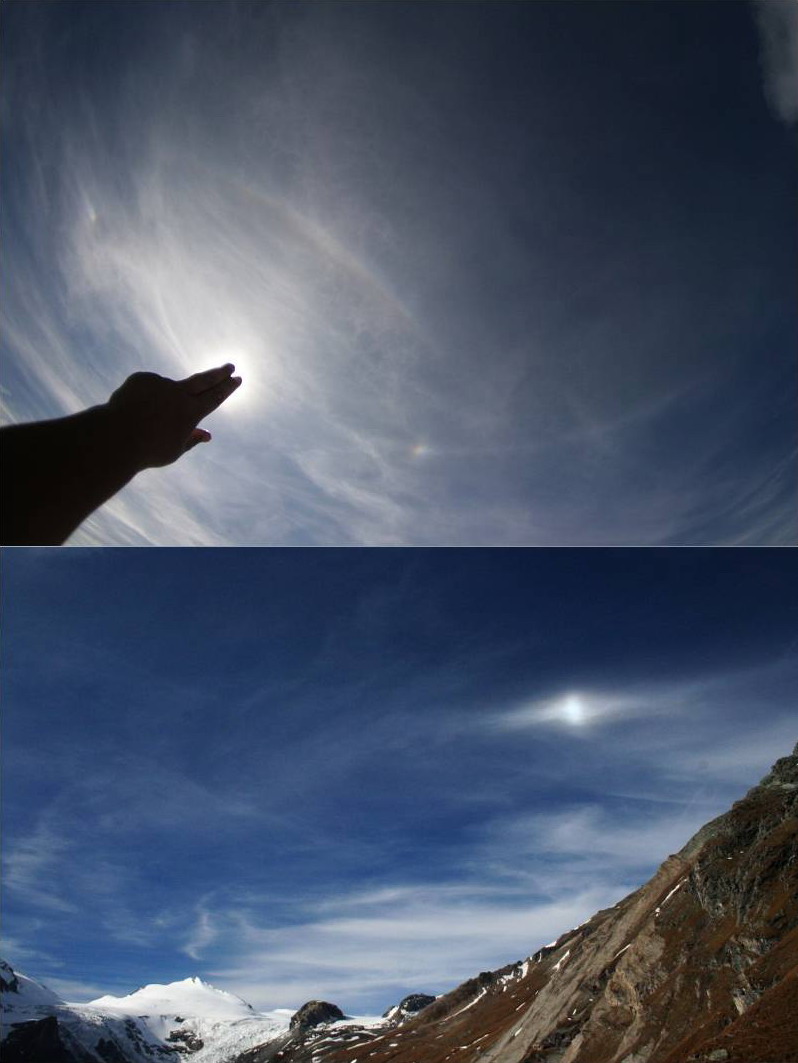
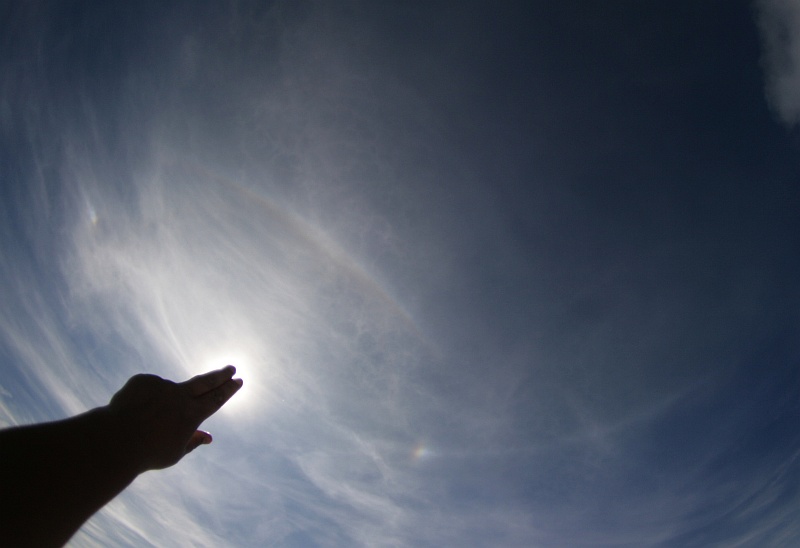
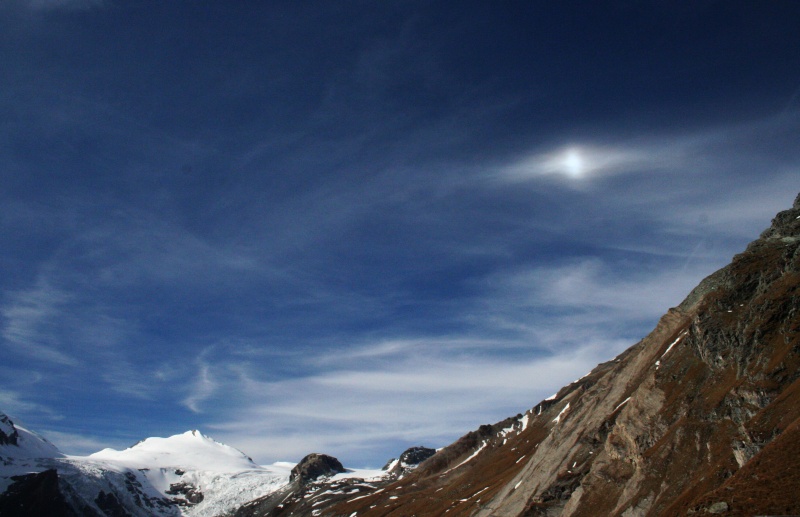
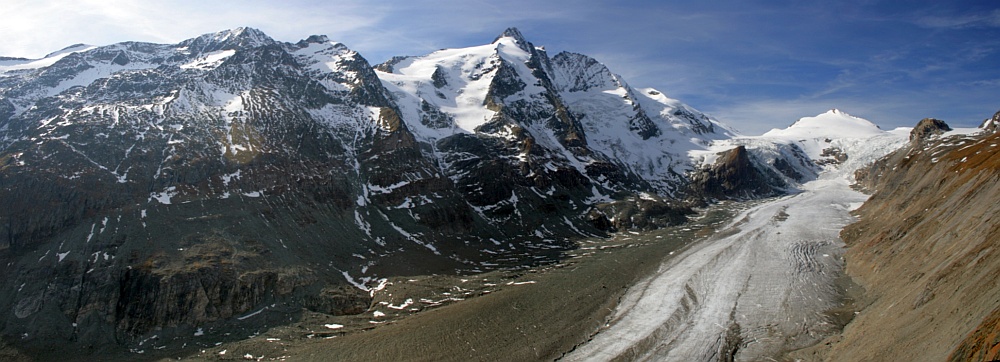
On October 9, 2007, my husband and I made a trip to Austria to visit the highest mountain of that country, Mt. Großglockner, 3798m ( 1 ). The main ridge of the alps gave a warm welcome to us with a bright and diffuse fragment of the infralateral arc ( 2 ). Just a little later, at a sun elevation of 33.4°, a sharply defined Parry arc ( 3 ) formed directly above the upper tangent arc. There were only few occasions that we saw it in such a brightness before. The beautiful halo display was completed by sundogs ( 4 ) and an almost complete parhelic circle ( 5 - 6 ). Even the heliac arc seemed to be present, as we both recognized it. The cirrus clouds, however, showed a very striated structure, so it cannot clearly be identified in our photographs.

In the afternoon, at a sun elevation of 30.9°, a fragment of the parhelic circle appeared in a narrow cirrus fiber together with a bright 120°-sundog. This sundog not only had a greenish and reddish rim ( 7 ), but also showed a striking vertical extension from time to time. Below it there seemed to be kind of cross-formed arcs ( 8 ) like those which normally appear around the anthelion only.

Text: Claudia Hinz

Austrian Halo Display with Parry arc

On October 9, 2007, my husband and I made a trip to Austria to visit the highest mountain of that country, Mt. Großglockner (3798m). The main ridge of the alps gave a warm welcome to us with a bright and diffuse fragment of the infralateral arc. Just a little later, at a sun elevation of 33.4°, a sharply defined Parry arc formed directly above the upper tangent arc. There were only few occasions that we saw it in such a brightness before. The beautiful halo display was completed by sundogs and an almost complete parhelic circle (with unsharp mask). Even the heliac arc seemed to be present, as we both recognized it. The cirrus clouds, however, showed a very striated structure, so it cannot clearly be identified in our photographs.


In the afternoon, at a sun elevation of 30.9°, a fragment of the parhelic circle appeared in a narrow cirrus fiber together with a bright 120°-sundog. This sundog not only had a greenish and reddish rim, but also showed a striking vertical extension from time to time. Below it there seemed to be kind of cross-formed arcs like those which normally appear around the anthelion only.

2007. október 16., kedd

Halo Complex 15th October 2007


After over 90 days of above 90 degree temps and no halos this half-way decent display shows itsself in high clouds. Upon leaving work, I got quite a few photos. In all I got 22d halo, parhelia, upper tangent arc, bits of parhelic circle, infralateral arcs, 120d parhelia, and an upper suncave parry arc. While on the road I observed a rather bright 120d parhelion on the left side. As the patch of cloud shifted to the north the blue spot appeared and got several photos of it. When enhanced, the bluespot shows green, blue and purple and possible red but can't be sure. The one photo showing the Parry has ugly power lines but could not help that because I was shooting out the car window. If you wondering if I was driving at the time I wasn't because one should not drive and take photos at the same time. During those halo free days the temps were breaking records even in October and it was nice to see halos again.


2007. október 10., szerda

Complex Halo Display with Wegener´s anthelic arcs in Germany

In the early afternoon of July 8, 2007, Reinhard Nitze could observe the most extensive halo display with 8 different halo types he had ever witnessed.

The most interesting feature of the display was probably the appearing of the anthelion with Wegener´s anthelic arcs attached to it. The left part of Wegener´s anthelic arc was clearly visible to the naked eye, but in the photographs also the right part seems to be faintly visible. One picture, processed by an unsharp mask, even gives the impression of a faint “halo-X” on the parhelic circle. The 120°-sundogs, were clearly visible too.

Also the other side of the sky around the sun looked interesting. The sun was surrounded by a faint 22°-degree halo, and on top of it there was a bright and colourful upper tangent arc respectively circumscribed halo with a Parry arc attached to its upper side. As the circumscribed halo crossed the sundogs exactly, I first thought of the Lowitz Arc (erroneously). Both sundogs were visible, the left one for a short time very bright and colourful. The parhelic circle was faintly visible even inside the 22°-halo on the left side. But this part of it it was not very bright. At its largest extension, two thirds of the parhelic circle were visible. Unfortunately, low clouds often disturbed the observation.

2007. október 7., vasárnap

Concave & convex Parry arcs photographed in Georgia

A visitor of my homepage emiled me this photo of a complex display that took place in Rome, Georgia and the year I can't remember but it was in the early 90's and of all the halos the bright upper concave and convex parry arcs are the most interesting. This is probably the best I have seen where both upper parry arcs are visible . Other images show a bright supralateral arc as well. The person who sent the photo is Loren Hall and his email is: bctimebandit@earthlink.com