2008. január 24., csütörtök

Halo and northern lights

Some ten years ago or so my friends and I went though Finnish Meteorological Institute automatic northern light camera films in search for moon halos. At that time I considered the northern lights as unnecessary noise that disturbed the distinction of halos on those low resolution 8 mm films.

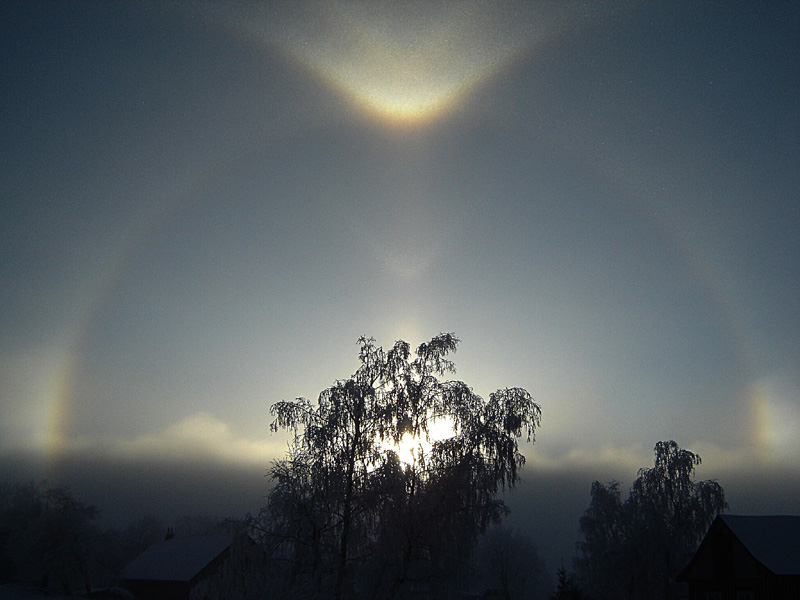
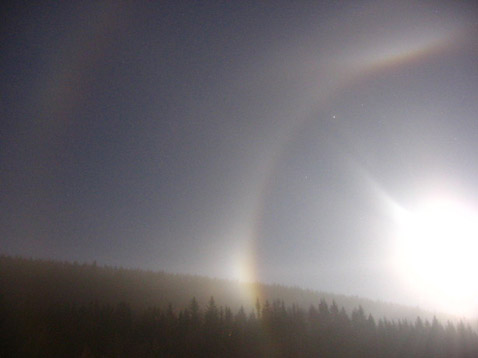
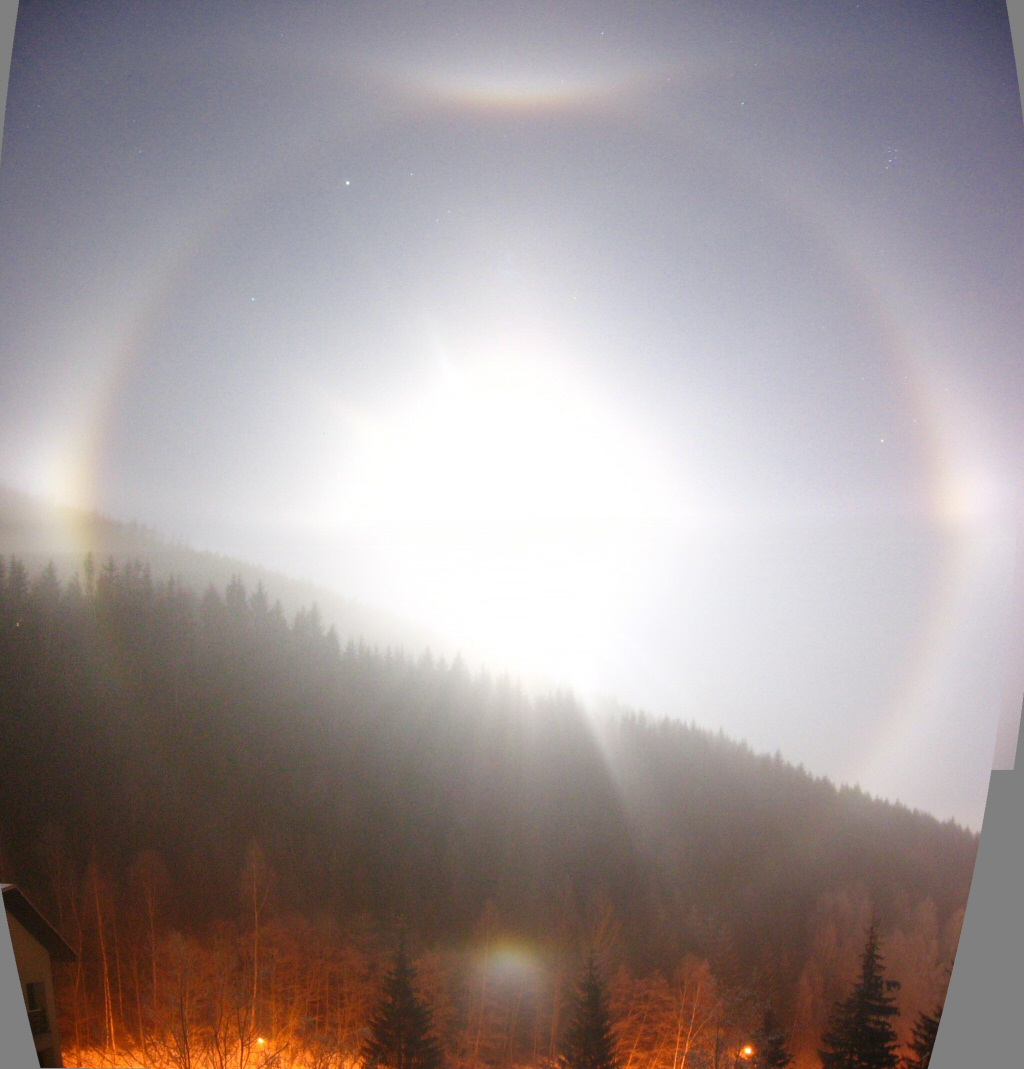
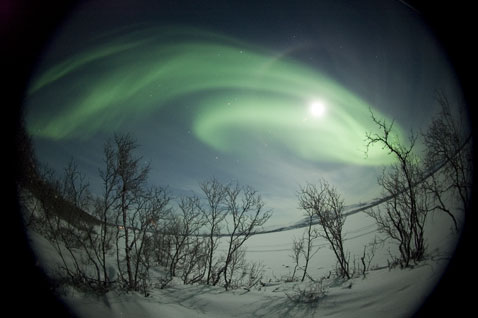
Last Thursday I was photographing a moon halo display in Kilpisjärvi biological station, when suddenly green northern lights moved fast across the halos. It was a rather nice treat and above is one photo of those moments.

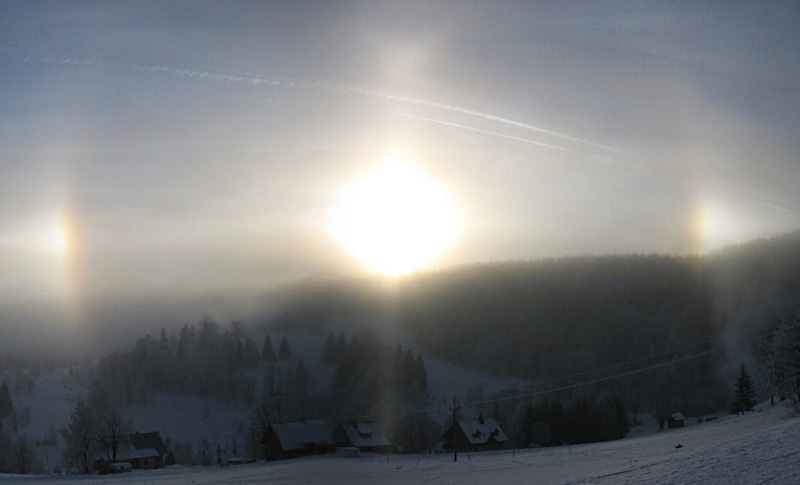
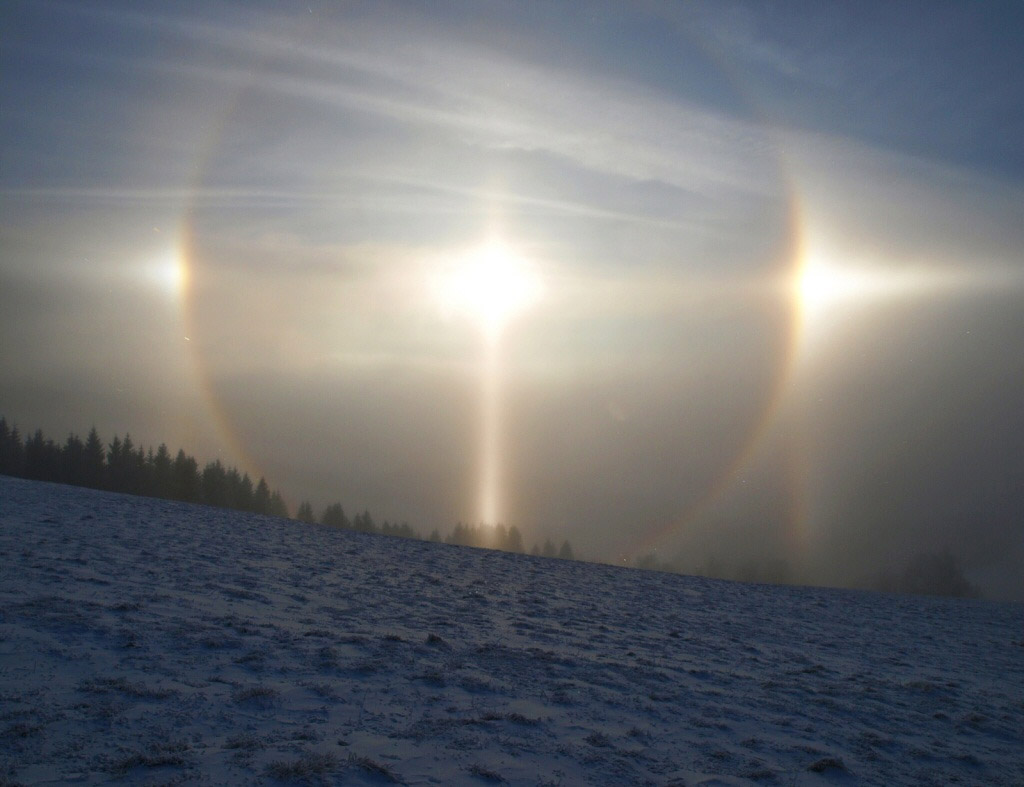
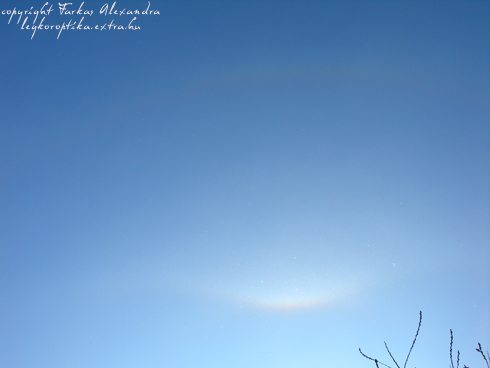
Also a 9° halo was in the sky on that night, as shown by this photo. Two nights later the 9° halo reappeared, but the display was much poorer.

2008. január 23., szerda

Moilanen arc and diffuse anthelic arcs in Prichovice

A superb halo complex was observed by Petr Kousal on December 25, 2007 in community of Prichovice. He observed 22° halo, parhelia, pillar and also bright upper tangent arc with sunvex Parry arc. Except for these quite frequent phenomena he observed also Moilanen arc, which tips almost touched the 22° halo ( 1 - 2 - 3 - 4 ).

The best event came when he looked towards anthelion point, where diffuse arcs were clearly visible. This observation of diffuse arcs is the first in the Czech Republic ( 1 - 2 - 3 ).

This display was also captured by Martina Pistorova during her afternoon walk to the outlook-tower Stepanka in Prichovice ( 1 ). Analogous halo complex with Moilanen arc was also observed and photographed by Frantisek Kovarik in community Prichovice ( 1 ).

Also Hana Koukalova observed halo complex in the same community. Faint heliac arc is maybe displayed in one of her pictures ( 1 - 2 ). And finally, also Julia Vachkova observed a few halos together with infralateral arc ( 1 - 2 )

Text: Martin Popek, Lukas Shrbeny

2008. január 21., hétfő

Moilanen arc in Paprsek

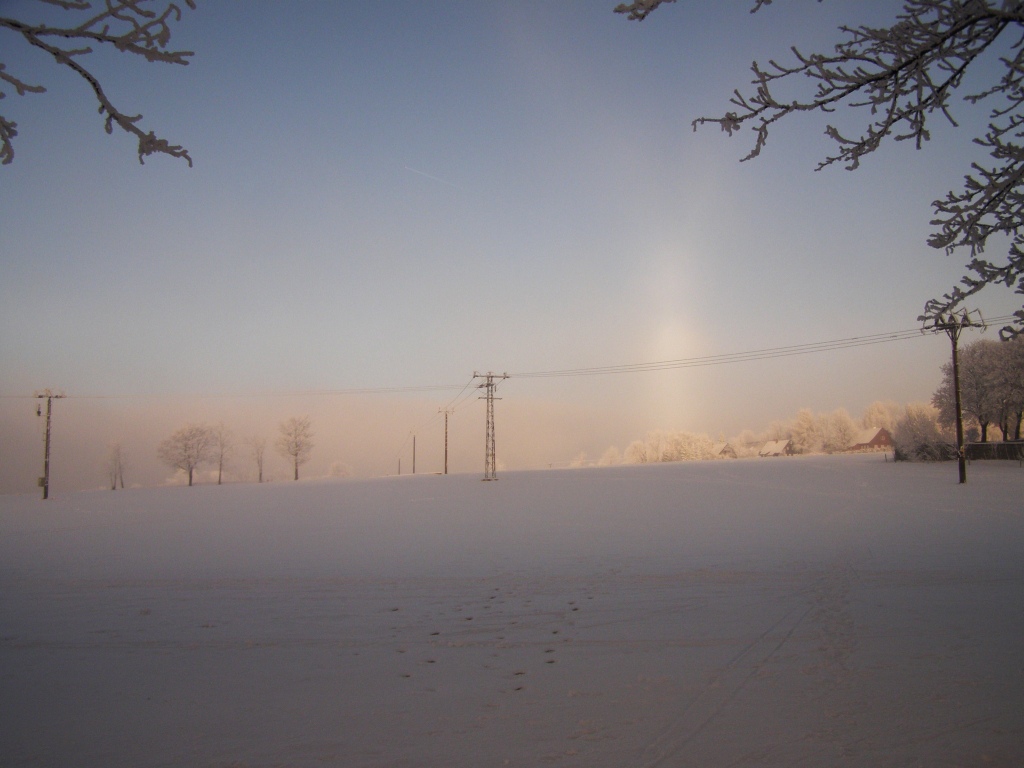
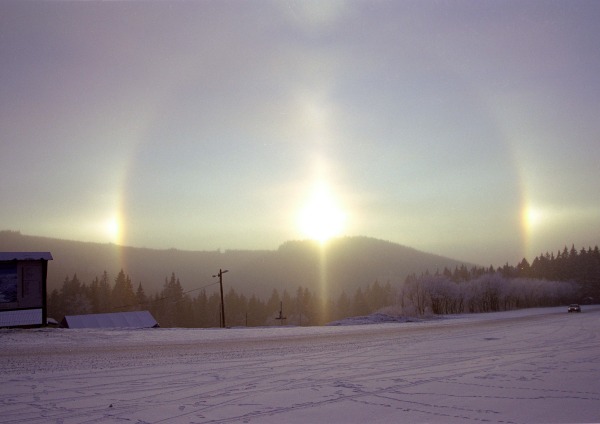
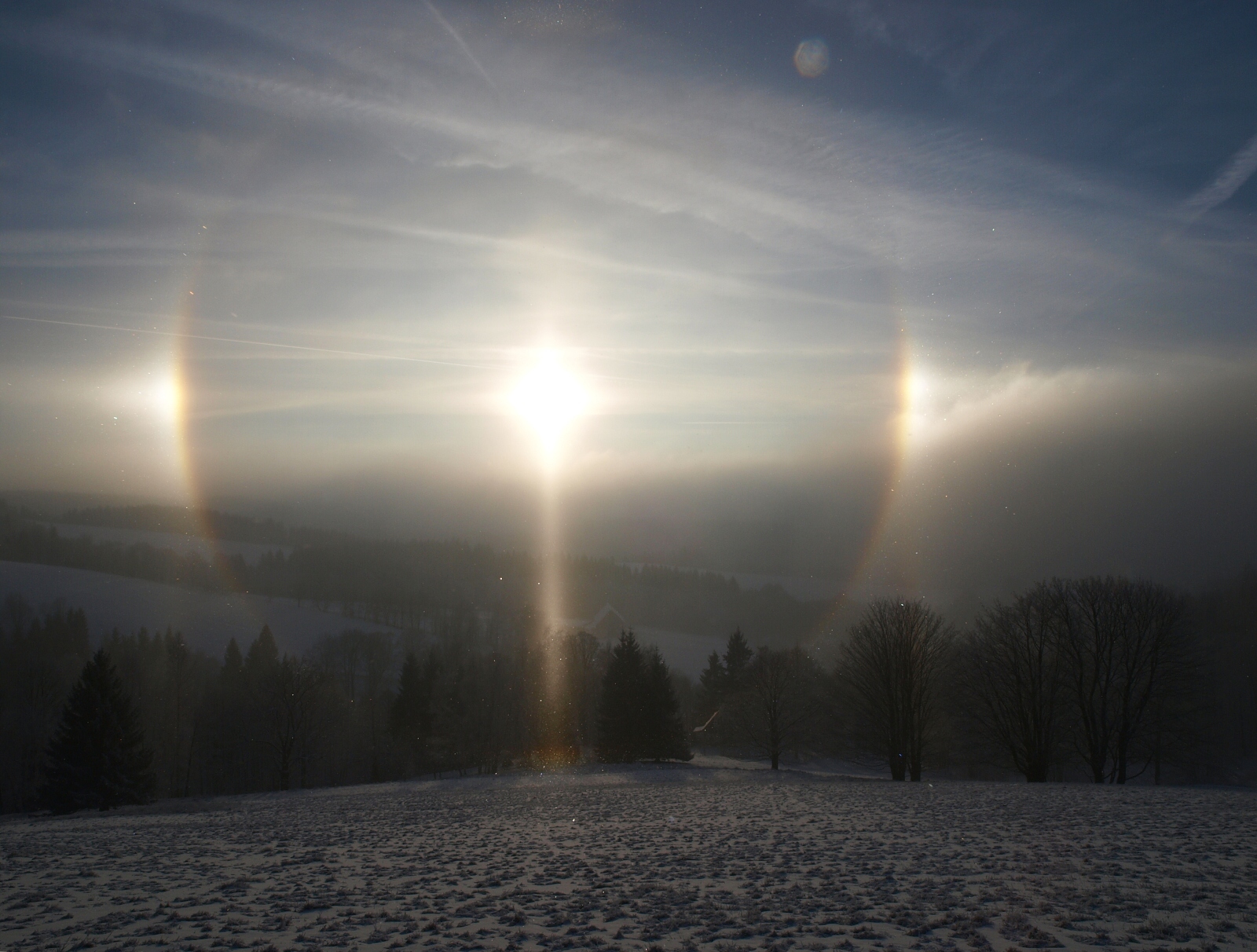
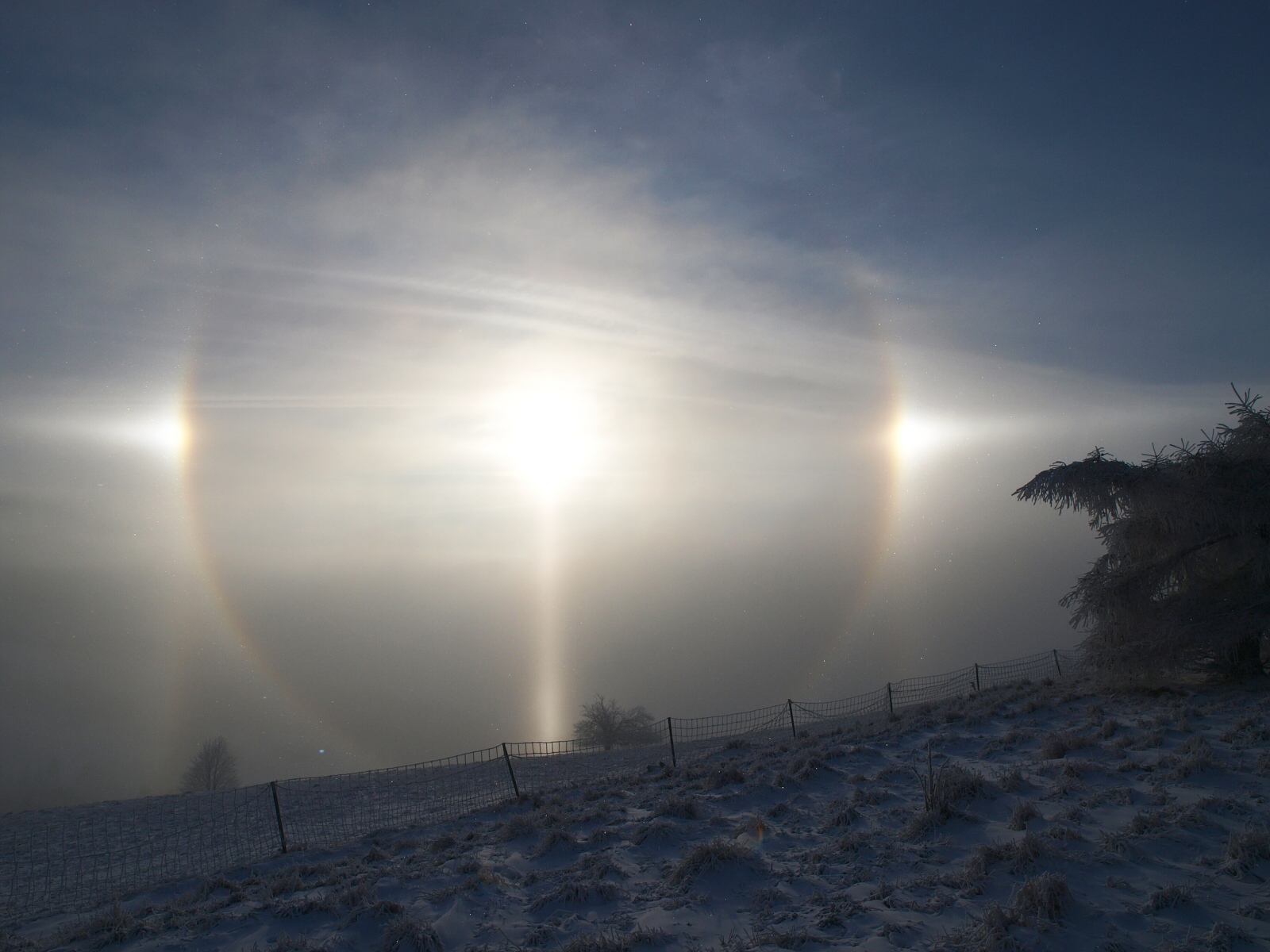
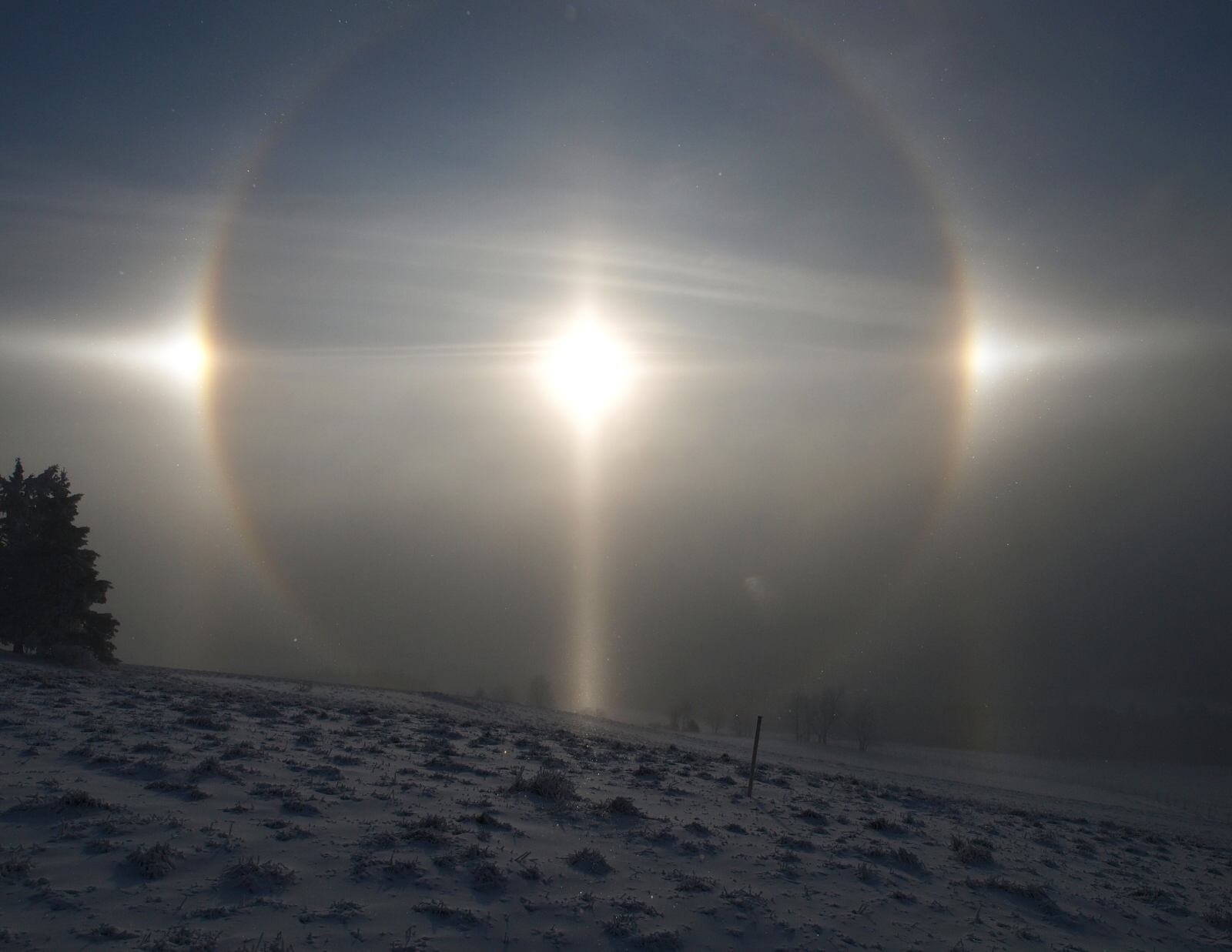
In Czech mountains Ivo Bartos observed diamond dust halos on December 23, 2007 near ski area of Paprsek, which is situated in the highest Moravian mountains.

From 2 to 5 pm he most of the time observed sun pillar and parhelia with fragments of 22° halo. Culmination of the phenomenon occured at 4 pm when Moilanen arc appeared. This is the fourth observation of this arc in the Czech Republic.

The first Moilanen arc in the Czech Republic was observed by Ivo Brezina in January 2003 in Horni Misecky along with other bright halos ( 1 - 2 ).

The second case was by Milan Martinek in Bozi Dar in February 2004, who, besides Moilanen arc, observed also upper sunvex Parry arc heliac arc and maybe Lowitz reflected arcs. The photos of the heliac arc were the first in Czech Republic. The third Moilanen arc was observed together with bright upper tangent arc by Emil Brezina on January 1, 2006 in Vsetin.

Also Moilanen arc observed by Jan Bim on December 20, 2006 in Austrian Alps is noteworthy ( 1 - 2 - 3 ).

Text: Martin Popek, Lukas Shrbeny

2008. január 20., vasárnap

Two Parry arcs in Ohio

While at work prior to leaving I was outside and happened to look up and saw nice wide tangent arc spreading out. Inside it was a convex Parry, the first decent one since 2000. As I watched and shot photos I could see the more common concave arc and there was also faint supralateral arc and circumzenith arc.

I also visually could see Lowitz arc curving down from upper concave Parry arc and circular lowitz arc near the sunvex arc touching the 22° halo. What a way to start the new year for halos. It was nice to see both Parrys at once. Photos were unsharp masked to enhance the halos.

Text: Michael Ellestad

2008. január 15., kedd

The arms of parhelia and subparhelia on the Pansky Vrch hill

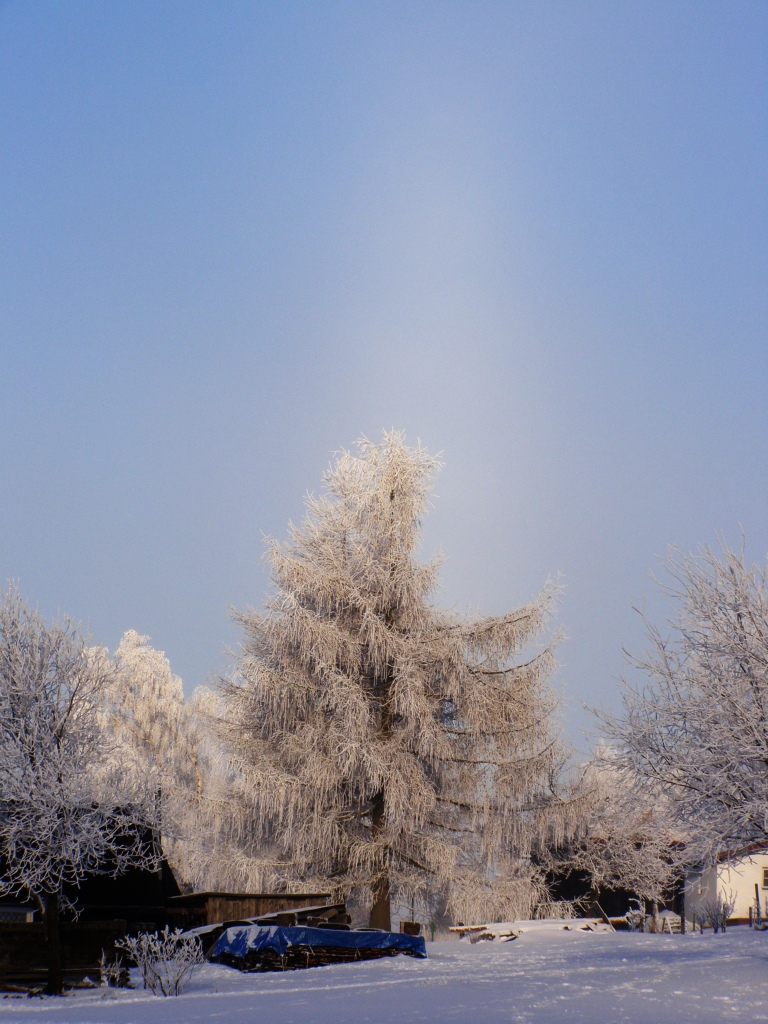
On December 23, 2007 (1:40 – 3:50 pm) Ladislav Nyc observed during his afternoon walk bright halos in diamont dust. When he went up from inversion cloudiness to see sunrays, on the hill of Pansky Vrch a great spectacle came along. Except for frequent halos like pillar, 22° halo, parhelia and upper and lower tangent arcs also subhalos were visible: bright subsun and subparhelia with arms of parhelia. These arms of parhelia, which join subparhelia and parhelia of 22° halo, are the first ones observed in the Czech Republic. More photos ( 1 - 2 - 3 ).

Also Stanislav Bernard in Sedlonov saw halos during his walk around Orlicke hory, mountains in the north part of the Czech Republic ( 1 - 2 ).

Text: Martin Popek, Lukas Shrbeny

2008. január 11., péntek

Moon halos in Pec pod Snezkou

On December 23, 2007 from 6 to 7 p.m. local time Lubos Brat observed bright Moon halo complex. 22° halo, complete paraselenic circle, upper and lower tangent arcs and circumzenital arc dominated the display (see a composite image). In addition to these quite frequent halos also upper suncave Parry arc, 46° Parry arc and helic arc were present, as shown by the photo above.

Lower component of the Lowitz arcs may be present as a vague brightening on the 22° halo (right side), see this photo. Lubos Brat observed also halo phenomena in the artificial light and he was the first person in the Czech Republic to take a photo of superparhelia.

More photos of halo phenomena observed in Pec pod Snezkou between December 22, 2007 and January 5, 2008 are available on the Lubos Brat web site Altan Observatory.

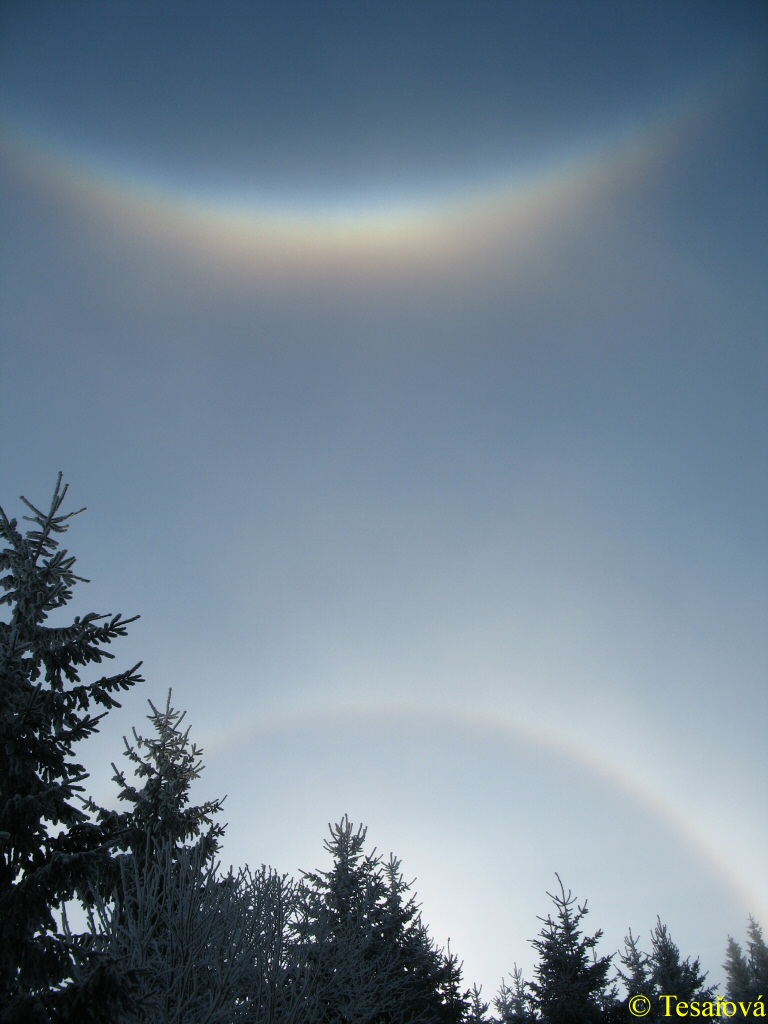
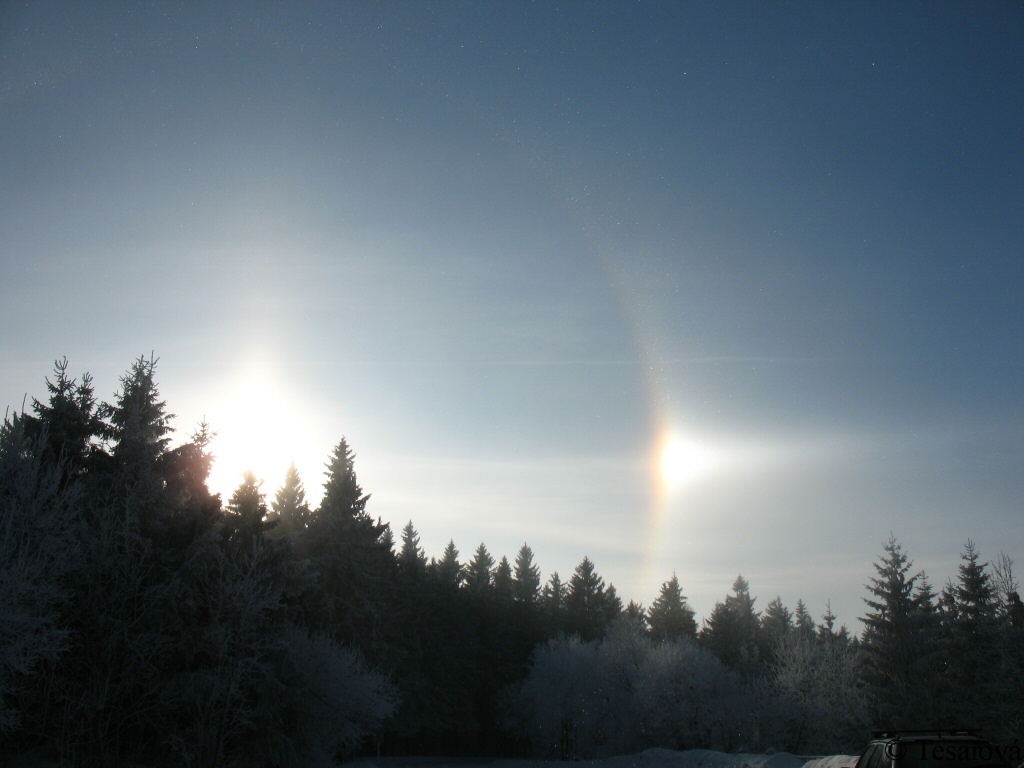
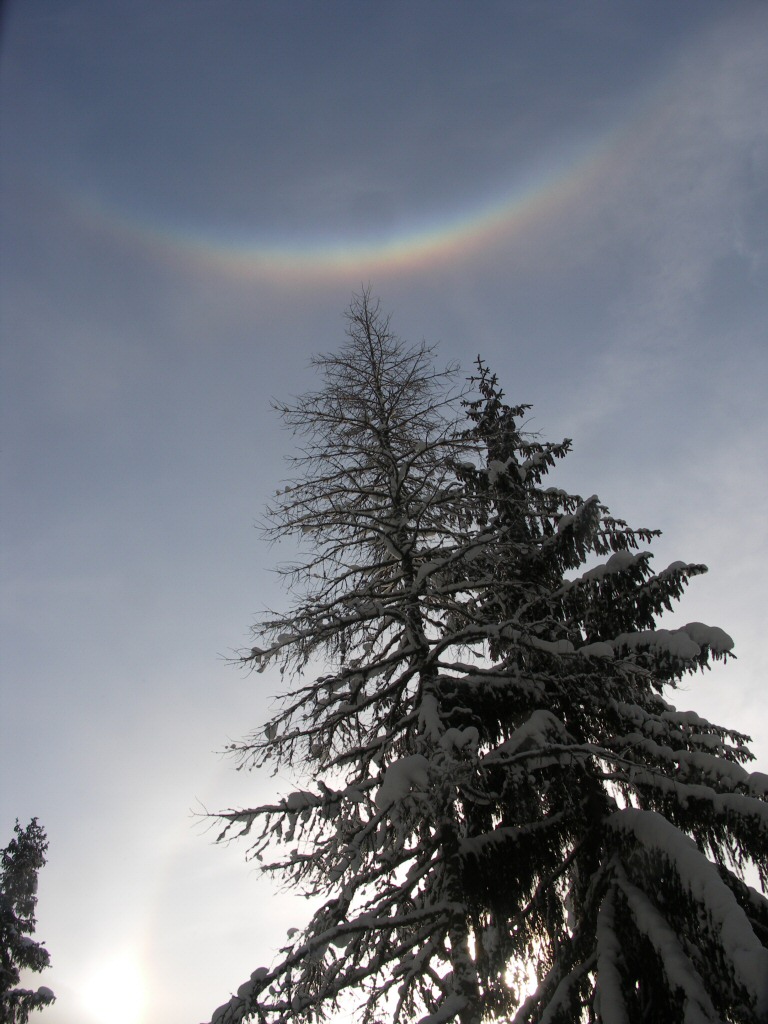
Daytime halos were also seen on the 23 December. In the Orlické mountains Hana Tesarova photographed a display with bright circumzenital arc ( 1 – 2 ).

Beautiful circumzenital arc was observed also on December 16, in Western Tatras mountains by Boris (Slovakia), see photo here.

Text: Martin Popek, Lukas Shrbeny
2008. január 9., szerda

Moilanen arc in Mátraszentimre, Hungary

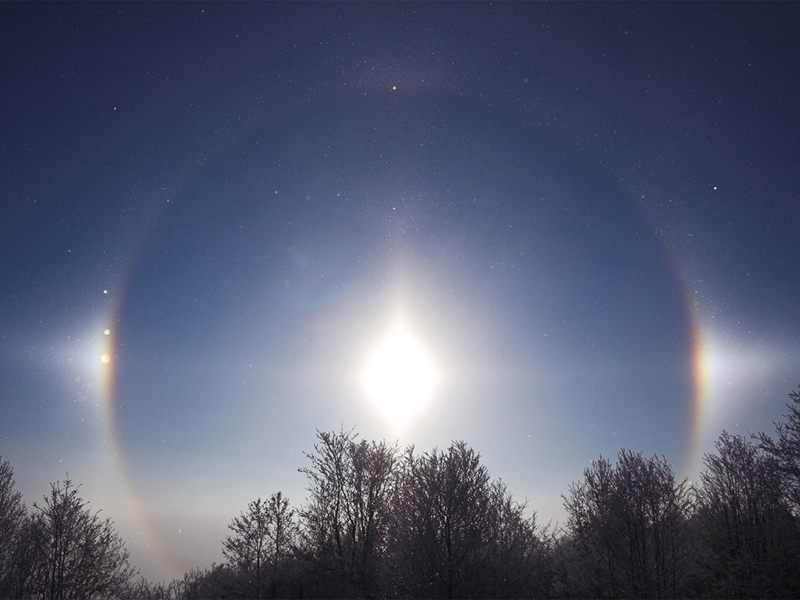
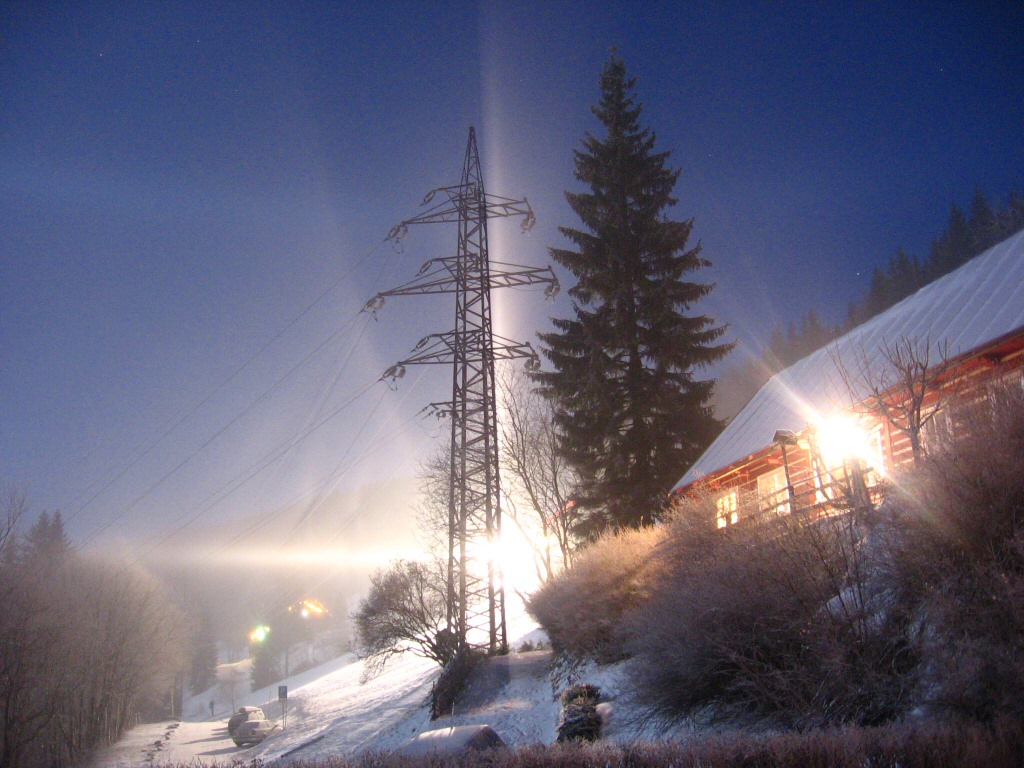
This photo shows the diamond dust display near Mátraszentimre skiing resort in Hungary on 30th December and was taken by photographer Zsuzsanna Tóth. The snow guns were on, and the halo appeared in the early afternoon and lasted about an hour. The display was the best at around 2 p.m. Then the 22° halo, parhelia and upper tangent arc were accompanied by a Moilanen arc. As indicated by the bright parhelia and a less conspicuous upper tangent arc, the display must have been dominated by plate crystals. Unfortunatelly, however, there was no one around who would have collected samples, so the mystery remains unsolved.

Natural diamond dust is very rare in Hungary, due to our temperate continental climate. But this winter has so far been much colder than the average ones, and it has resulted in a pretty diamond dust display without the assistance of any snow guns on 3rd January in Mogyoród. Alexandra Farkas took this picture of UTA, CZA, and supralateral arc. The halos don't show anything extraordinary, still it was a unique sight in Hungarian winter.