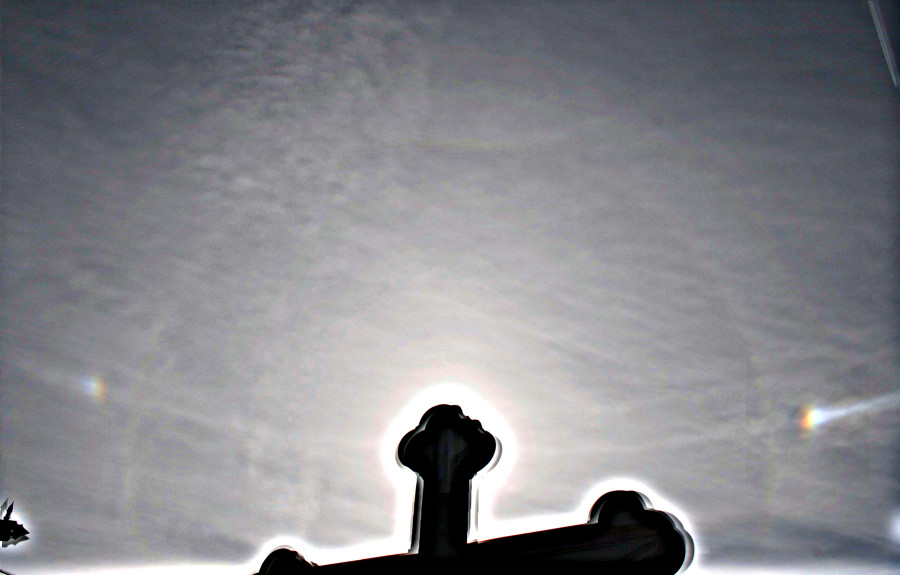
On Mar/3/2007 I captured a halo display with a remote webcam in Oklahoma/USA. The camera image shows a bright parhelic circle, 120° parhelion and a rare Wegener arc forming a cross on the parhelic circle. A time lapse movie is available here:


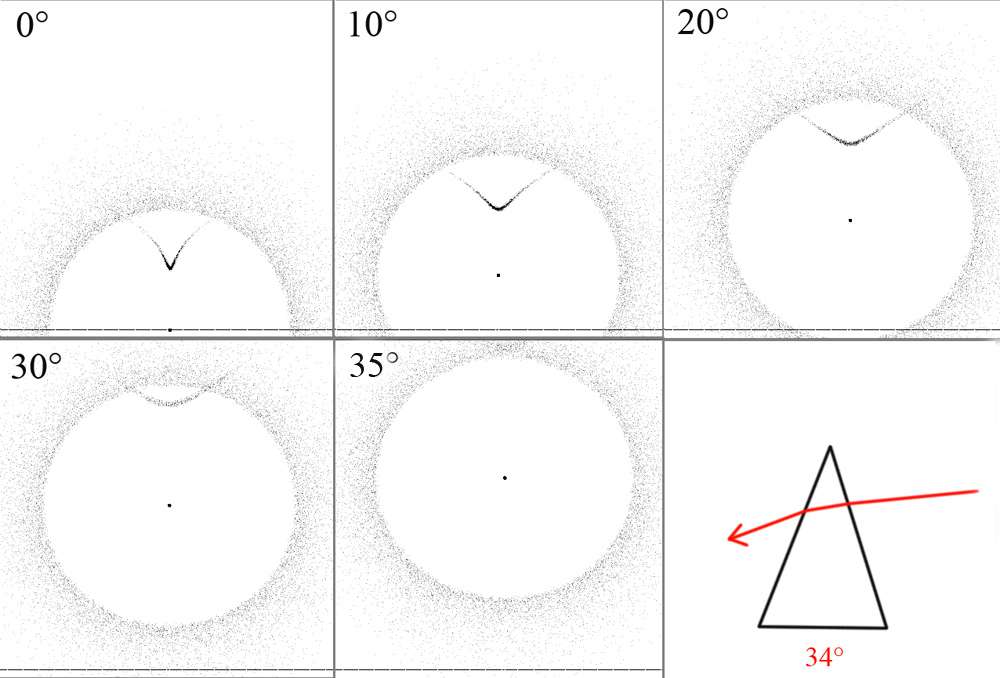
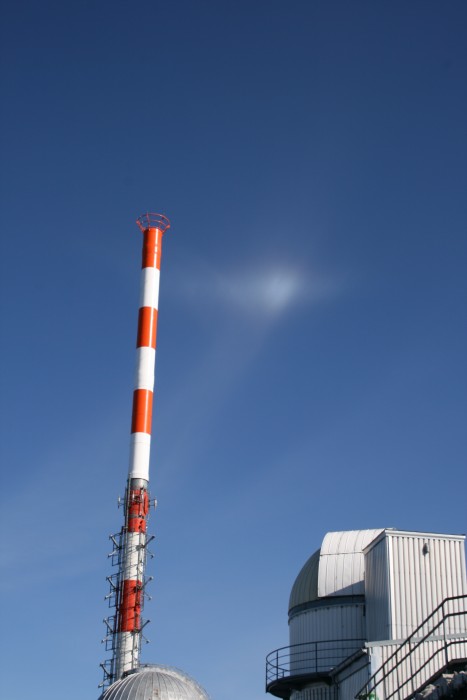
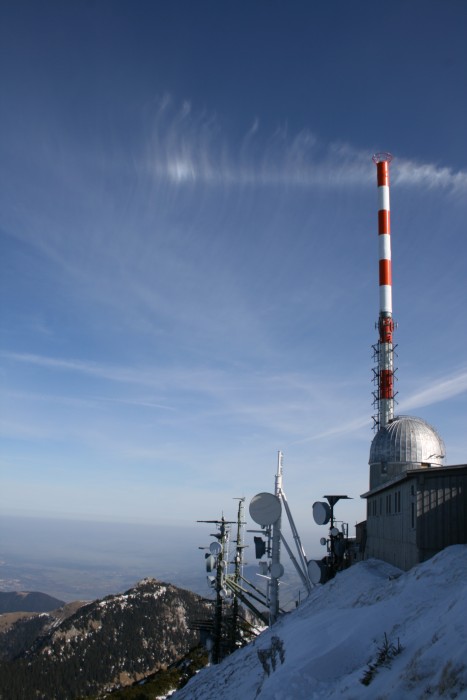 On February 20 there were a lot of cirrus shreds in the foehn area of a strong northern low pressure area. Already in the morning there appeared unusually bright sundogs and a circumzenithal arc of the same brightness in these cirrus shreds. Later also a Parry arc appeared together with parts of the parhelic circle and very bright 120°-parhelia which had an accentuated reddish rim. At 11.50 CET, another arc seemed to form above the left 120°-sundog which stayed at its position for about 10 minutes while the cirrus clouds kept moving on. As the simulation for a sun elevation of 24° shows, the position of that arc fragment is identical to the subheliac arc.
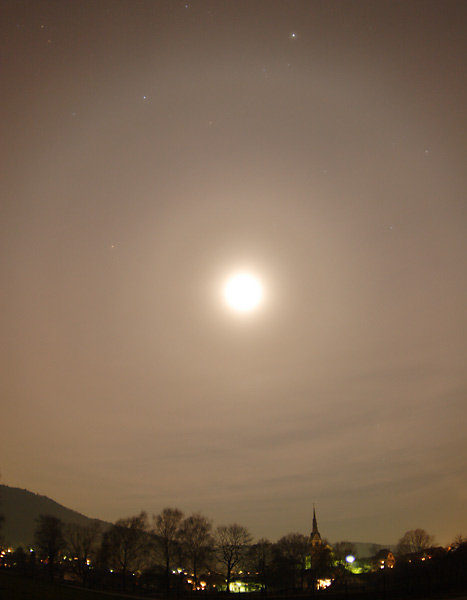 On the 23rd of February Harald Wochner took his obligatory view out of the dormer window towards the night sky. Immediately, he realized an unusual circle which later turned out to be a 9° halo around the moon. Right at this moment he took his Camera and tripod and went a couple of hundred meters away from his village in order to have a darker sky. He could also recognize a feeble 22° halo in larger distance from the moon. There one could see the structures a little bit more. The 9° halo maintained itself in a good shape and could partially better be seen than the 22° halo which acted really diffusedly. Which the descending of the moon, the intensity of the circles decreased steadily.